






What's Happening?
President William Ruto of Kenya has provided an update on the construction progress of the Bomas International Convention Complex in Nairobi. He shared a video tracing the facility's transformation between June and October 2026. The footage, posted on October 31,
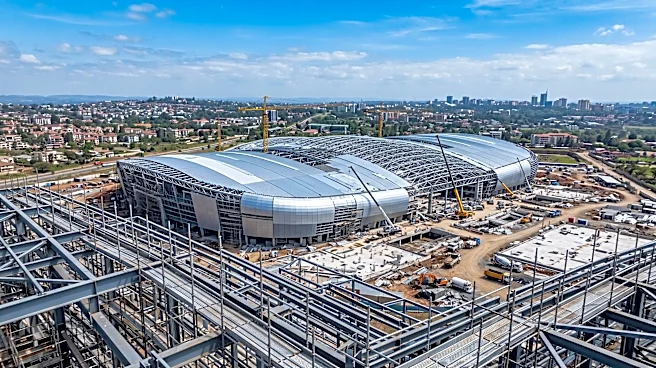
2026, from the President's official page on X, includes aerial drone shots and ground-level close-ups. These shots capture the building's sweeping steel framework, roofing work, and facade cladding at various stages of development. On-screen date stamps and a State House Kenya watermark give the montage an official, documentary feel. The video highlights the significant advancements made in just a few months, with early shots from June 2026 showing the skeletal steel structure and October 2026 footage revealing a much more complete picture, with roofing panels in place and exterior finishing work well underway. The scale of the building is evident from the drone sequences, framing the complex against the Nairobi landscape. President Ruto's narration frames the development as a strategic investment in Kenya's meetings, incentives, conferences, and exhibitions (MICE) industry, emphasizing the facility's capacity to host large-scale international gatherings.
Why It's Important?
The development of the Bomas International Convention Complex is a significant undertaking for Kenya, aiming to bolster Nairobi's position as a premier destination for meetings, incentives, conferences, and exhibitions (MICE) in Africa. This project is designed to expand the site's offerings substantially, making it a serious competitor to other major conference hubs across the continent. By enhancing its capacity to host large-scale international events, Kenya seeks to attract more foreign investment, boost its tourism sector, and create numerous job opportunities within the hospitality and related industries. The MICE industry is a crucial economic driver, and a state-of-the-art convention center can generate substantial revenue through delegate spending on accommodation, transport, dining, and local services. This initiative reflects a broader strategy to improve national infrastructure and enhance Kenya's global standing as a business and cultural hub, potentially leading to increased international engagement and economic growth.
What's Next?
The project appears to be on track for an official opening in the near term, with the October footage suggesting that the bulk of structural and exterior work is largely complete. The focus will likely shift towards interior finishing, technological installations, and operational readiness to host international events. The successful completion and launch of the Bomas International Convention Complex are expected to significantly enhance Nairobi's appeal as a MICE destination, potentially attracting a greater number of international conferences and events. In a related development, President Ruto also highlighted the ongoing multi-billion shilling redevelopment of Nairobi's Gikomba Market. This project aims to modernize the trading hub by replacing cramped, fire-prone conditions with structured, safe facilities designed to accommodate thousands of traders and prevent recurring market fires. While supporters praise this infrastructural upgrade, it has also generated mixed reactions and political debate regarding its timing and execution.
Beyond the Headlines
The investment in the Bomas International Convention Complex and the Gikomba Market redevelopment reflects a broader national strategy to modernize infrastructure and stimulate economic growth. Beyond the immediate economic benefits, such projects can have profound social and cultural impacts. A world-class convention center can foster intellectual exchange, innovation, and cultural diplomacy by hosting diverse international gatherings. Similarly, modernizing markets like Gikomba can improve working conditions for traders, enhance public safety, and formalize informal economic sectors, leading to greater economic stability for many citizens. However, large-scale urban development projects often come with challenges, including potential displacement, environmental concerns, and debates over resource allocation. The mixed reactions to the Gikomba Market project underscore the importance of inclusive planning and community engagement to ensure that development benefits all stakeholders and addresses potential negative consequences.