








What's Happening?
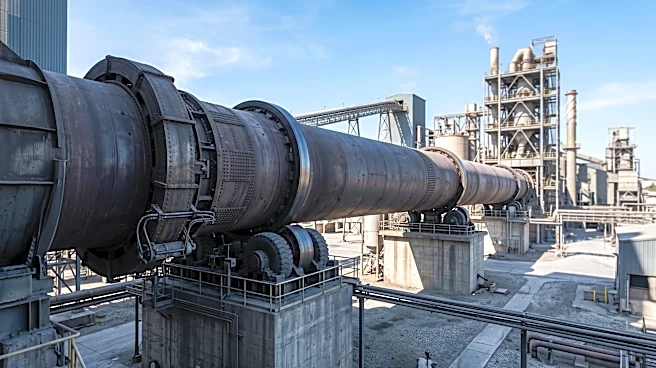
Afghanistan has officially opened the first phase of the Shorandam Cement Factory in Kandahar province. Mullah Abdul Ghani Baradar, Deputy Prime Minister for Economic Affairs, presided over the inauguration ceremony. This initiative aims to expand domestic
cement production and reduce the country's reliance on imports. Baradar emphasized the importance of utilizing domestic resources and shifting towards a production-driven economy to achieve sustainable economic development. The first phase of the factory is designed to produce 1,500 metric tons of cement daily and is expected to create thousands of direct and indirect jobs. Hidayatullah Badri, Minister of Mines and Petroleum, noted that this marks the resumption of cement production in Afghanistan since the Islamic Emirate assumed power. Six major cement production projects are currently underway across the country, representing a combined investment of $662 million. These projects are projected to generate employment for approximately 15,000 individuals and fulfill nearly 50 percent of Afghanistan's domestic cement demand upon completion.
Why It's Important?
The inauguration of the Shorandam Cement Factory is a significant step for Afghanistan's economic self-sufficiency. By boosting local cement production, the country aims to decrease its dependence on imported cement, which can lead to more stable prices for construction materials and support the growth of the domestic construction industry. This move is crucial for job creation, with thousands of direct and indirect employment opportunities expected from the first phase alone, and more from the ongoing projects. Reducing imports also helps conserve foreign exchange reserves, strengthening the national economy. The emphasis on a production-driven economy, as highlighted by Deputy Prime Minister Baradar, signals a strategic shift towards industrialization and away from a consumer-based model, which could foster long-term economic stability and growth. The collective investment of $662 million in six cement projects underscores a substantial commitment to developing Afghanistan's industrial sector and infrastructure.
What's Next?
Following the inauguration of the first phase, work on the second phase of the Shorandam Cement Factory is anticipated to commence. The ongoing development of six major cement production projects across Afghanistan will continue, with the goal of meeting nearly 50 percent of the country's domestic cement demand. The government's focus will likely remain on ensuring the quality of production and adherence to industrial standards, as stressed by Islamic Emirate spokesperson Zabihullah Mujahid. Efforts to attract further investment in the industrial sector and explore opportunities for expanding exports are also expected. The success of these initiatives will be crucial in determining Afghanistan's ability to reduce its reliance on imports and achieve its economic development goals.
Beyond the Headlines
This development reflects a broader strategic effort by Afghanistan to leverage its natural resources and industrial capabilities to achieve economic independence. The shift from a consumer-based to a production-driven economy could have profound long-term implications for the country's economic structure and its position in regional trade. The creation of numerous jobs in the industrial sector could also contribute to social stability and provide alternative livelihoods, potentially addressing some of the underlying economic challenges. The emphasis on domestic production and reduced imports could also influence regional trade dynamics, as Afghanistan seeks to strengthen its internal market and potentially become a more self-reliant economic actor.