




What's Happening?
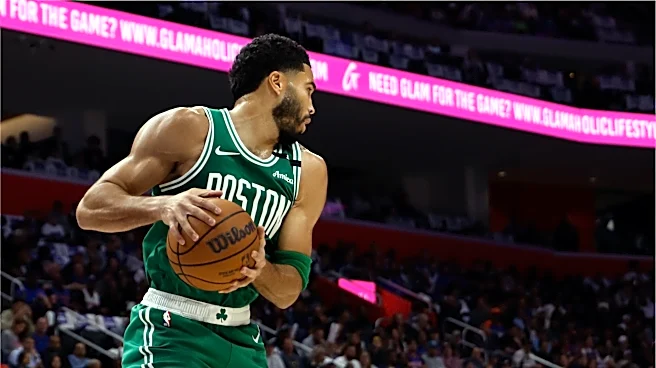
The Brooklyn Nets reportedly declined a trade offer for Jaylen Brown, a prominent player, due to concerns over his past association with Kyrie Irving and his critical remarks about Nets owner Joe Tsai. This information emerged from a report, suggesting
that internal team dynamics and the player's relationship with the ownership played a significant role in the decision-making process. The report indicates that the Nets' management considered these factors substantial enough to pass on acquiring Brown, despite his potential athletic contributions. The decision highlights the complex interplay between player relationships, team ownership, and trade negotiations in professional sports. The specific nature of Brown's criticism of Tsai was not detailed, but it was cited as a contributing factor in the trade rejection. This situation underscores how off-court issues and past interactions can influence major personnel decisions within sports franchises.
Why It's Important?
This reported trade rejection is important because it illustrates the growing influence of non-performance factors, such as player-owner relationships and past team dynamics, in professional sports transactions. For the NBA, it suggests that team owners and management are increasingly prioritizing team chemistry and alignment with organizational values over purely athletic considerations. This could set a precedent for future trade negotiations, where a player's history with other athletes or their public stance on ownership might become significant hurdles. For players, it emphasizes the potential long-term impact of their public statements and associations on their career trajectories and trade opportunities. The decision also reflects the power dynamics within sports franchises, where ownership's preferences can override strategic athletic acquisitions. This incident could lead to increased scrutiny of player-owner interactions and their role in shaping team rosters and league competitiveness.
What's Next?
The reported rejection of Jaylen Brown by the Brooklyn Nets could lead to several immediate and long-term consequences. For Jaylen Brown, this incident might affect his future trade value and potential destinations, as other teams could consider similar concerns. The Boston Celtics, Brown's current team, might need to address the implications of this report on their team dynamics and Brown's standing within the organization. For the Brooklyn Nets, this decision could spark discussions among fans and analysts regarding their strategic priorities and the criteria they use for player acquisitions. It may also influence how other players perceive the Nets' organization and its ownership. In the broader NBA landscape, this event could prompt a re-evaluation of how player conduct and relationships with ownership are factored into trade decisions, potentially leading to more stringent vetting processes for prospective players.
Beyond the Headlines
Beyond the immediate trade implications, this situation touches upon deeper issues of player agency versus organizational control in professional sports. The reported rejection of Jaylen Brown based on his past criticisms of Joe Tsai and his association with Kyrie Irving raises questions about the extent to which players are expected to align with team ownership's views. It highlights a potential tension between a player's right to express opinions and an organization's desire for internal harmony and public image. This incident could contribute to a broader conversation about the balance of power between players, who are increasingly vocal about social and political issues, and team owners, who seek to maintain control over their franchises. It also underscores the complex human element in sports, where personal relationships and past grievances can significantly impact professional decisions, extending beyond mere athletic performance.