





What's Happening?
Tobi Lütke, co-founder and CEO of Shopify, recently shared his views on the critical role of founders in companies and the transformative impact of AI on software engineering. Lütke asserts that founder-led companies are unique entities, arguing that the departure
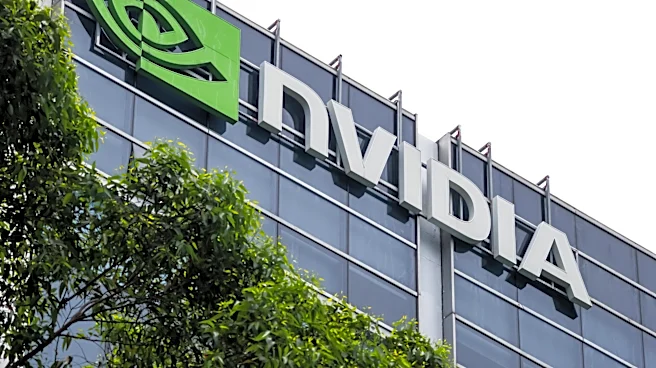
of a founder, such as Jensen Huang from NVIDIA, can lead to an irreplaceable loss of value that professional managers cannot replicate. He views NVIDIA as 'Jensen's exoskeleton,' suggesting that the company's essence is intrinsically linked to its founder. Lütke also detailed how AI agents are fundamentally reshaping software development at Shopify, emphasizing that formal verification is becoming the paramount engineering discipline. He described a process where AI identifies implicit state machines, generates TLA models for all reachable states, conducts security scans, and facilitates rebuilding in safer languages like Rust, all against formal verification and acceptance tests. This shift, he believes, redefines engineering's core skill from writing code to specifying and verifying it, as AI agents generate code at a volume humans cannot manually review.
Why It's Important?
Lütke's perspective highlights a significant debate within the U.S. business landscape regarding leadership, innovation, and the future of technology. His strong stance on founder irreplaceability challenges conventional corporate governance models that often prioritize professional management and succession planning. This view suggests that companies built by visionary founders possess an inherent value and direction that is difficult, if not impossible, to maintain once the founder departs. For the U.S. tech industry, this implies a potential re-evaluation of how founder-led companies are valued and managed, especially in critical sectors like AI. Furthermore, Lütke's insights into AI's role in software engineering signal a profound shift in the industry. The move towards 'verification engineering' and the use of AI for formal verification could drastically improve software quality, security, and efficiency across U.S. tech firms. This could lead to a new era of software development, where the focus shifts from rapid code generation to rigorous, AI-assisted verification, potentially reducing bugs and vulnerabilities in critical systems.
What's Next?
The implications of Lütke's observations suggest several potential next steps for the U.S. tech and business sectors. Companies may increasingly scrutinize their succession plans for founder-led enterprises, potentially seeking ways to retain founders or integrate their vision more deeply into the corporate structure. This could lead to new models of founder involvement even after stepping down from day-to-day operations. In software engineering, the adoption of AI-driven formal verification is likely to accelerate. As AI tools become more sophisticated, more companies will likely implement Lütke's suggested playbook: using AI to identify state machines, generate TLA models, perform security scans, and facilitate code rewrites in safer languages. This could lead to a significant industry-wide push for higher code quality and security standards, potentially driven by competitive advantages gained by early adopters. Furthermore, the discussion around the societal value of 'builders' and wealth creation, as opposed to wealth redistribution, may gain more traction, influencing public discourse on entrepreneurship and economic policy.
Beyond the Headlines
Lütke's commentary delves into deeper philosophical and economic implications beyond immediate business strategies. His argument that 'money enters the economy at the moment a product is created' challenges prevailing narratives about wealth distribution and emphasizes the fundamental role of innovation and entrepreneurship in economic growth. This perspective could influence policy discussions in the U.S. regarding support for startups, intellectual property rights, and the taxation of wealth, potentially shifting focus towards incentivizing product creation. Ethically, the discussion around founder removal, particularly in cases like Jensen Huang's, raises questions about the balance between personal conduct and the immense value a founder brings to a company and the broader economy. It prompts a re-evaluation of the criteria for removing leaders who are central to a company's success. Culturally, the shift in engineering from 'programmer' to 'maker' or 'verifier' signifies a fundamental change in the identity and skill set required for software professionals, potentially leading to new educational paradigms and career paths in the tech industry.