




What's Happening?
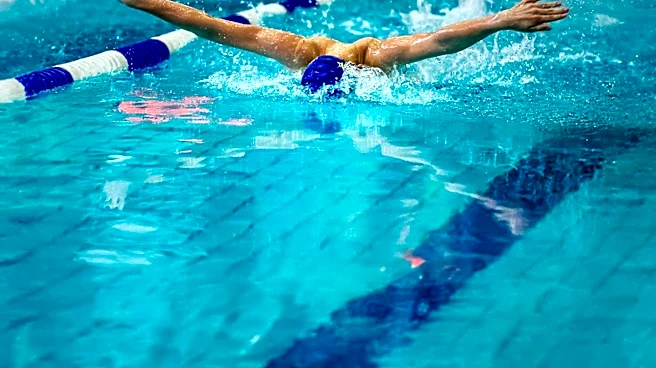
Florida Gulf Coast University (FGCU) swimmer Aislyn Barnett achieved a new FGCU and ASUN Conference record in the 1000 free with a time of 9:46.26 during a swim meet against SMU on November 7, 2026, in Fort Myers, Florida. Barnett, a senior transfer,
also won the 500 free in 4:47.86 and the 200 breaststroke in 2:12.90. Her performance was a highlight for the Eagles, despite SMU winning the overall women's meet 205-109. This record-breaking swim surpasses her previous FGCU record of 9:51.57 and the former ASUN mark of 9:48.98 set in 2023. Barnett's times have significantly improved since her transfer to FGCU, with a 12-second improvement in the 500 free and a 20-second improvement in the 1000 free compared to her best times at Auburn.
Why It's Important?
Aislyn Barnett's record-setting performance is significant for FGCU's swimming program, elevating its profile within the ASUN Conference and demonstrating the effectiveness of its coaching strategies. Her success, particularly after transferring due to the Grant House v. NCAA settlement, highlights how athletes can thrive in new environments and achieve personal bests. This achievement could attract more talent to FGCU, strengthening its athletic programs. For the ASUN Conference, a new record in a prominent event like the 1000 free raises the competitive bar and showcases the caliber of athletes competing within the conference. Barnett's story also serves as an inspiring example of resilience and adaptation for student-athletes navigating collegiate sports transitions.
What's Next?
Following this record-breaking performance, Aislyn Barnett and the FGCU swimming team will likely continue their season with increased momentum and confidence. The team's focus on quality training, as described by head coach Dave Rollins, suggests a strategic approach to maximizing athlete potential. Barnett, as a team captain, will continue to be a key leader and performer for FGCU. Her continued success could lead to further accolades and potentially national recognition for both her and the FGCU swimming program. The ASUN Conference will undoubtedly monitor her progress as she aims to further solidify her place in conference history.
Beyond the Headlines
Barnett's journey from Auburn, impacted by the Grant House v. NCAA settlement, to FGCU, where she has achieved significant personal and conference records, underscores the broader implications of collegiate sports regulations on individual athlete careers. Her story illustrates that while such settlements can lead to athlete displacement, they can also create opportunities for growth and success in new programs. This narrative highlights the importance of athlete well-being and the potential for positive outcomes even in challenging circumstances. It also reflects a trend in collegiate athletics where transfers can revitalize careers and contribute significantly to new teams, shaping the competitive landscape of conferences like the ASUN.