





What's Happening?
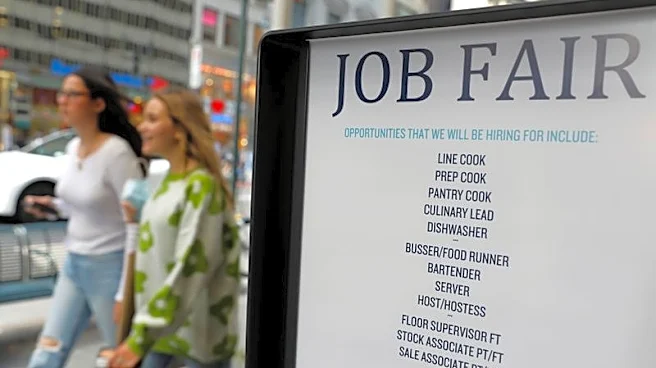
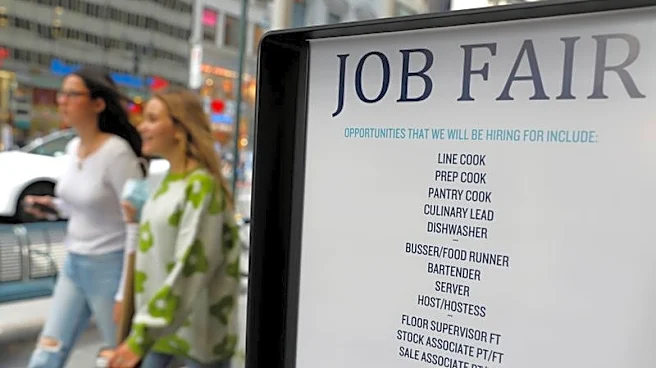
A number of U.S. companies are planning layoffs in July, as indicated by federal and state Worker Adjustment and Retraining Notification (WARN) data. This trend reflects a shift towards a more cautious hiring environment. The WARN system mandates that
employers with 100 or more workers provide advance notice, typically 60 days, before executing mass layoffs or plant closures. Despite a relatively low unemployment rate of 4.3% as of May, some employers are pulling back on hiring due to rising unemployment claims. The layoffs are concentrated in sectors such as software, cloud computing, and cybersecurity, where automation and artificial intelligence are changing workforce needs. Additionally, some manufacturing firms are reducing headcounts in response to declining consumer demand and plant restructuring. Companies like Sony Interactive Entertainment, Cisco, and Whirlpool Corporation are among those finalizing job cuts with July effective dates.
Why It's Important?
The planned layoffs highlight a labor market that has exited its rapid expansion phase but has not entered a broad decline. While the labor market remains historically stable, the sectors experiencing employment gains are increasingly uneven. The layoffs are driven by several factors, including companies' efforts to increase efficiency and the integration of AI systems that can replace or streamline roles. This shift suggests a 'low-hire, low-fire' economy, where companies are cautious about expanding aggressively but also reluctant to initiate large-scale terminations. The layoffs do not yet signal a collapsing labor market but indicate structural changes reshaping workforce requirements.
What's Next?
Looking ahead, the continuation of layoffs will likely keep unemployment claims near current levels and may reduce consumer spending marginally. However, this decline in discretionary spending could be offset by higher prices for non-discretionary goods and services. The future trajectory of layoffs will depend on various factors, including economic conditions and the pace of AI integration in the workforce. Analysts view the current environment as stable but fragile, with ongoing workforce churn rather than a sharp economic downturn.