





What's Happening?
C.H. Robinson has published its November 2026 Edge Report, offering comprehensive insights into the current freight market and global trade dynamics. The report, which is read by over 14,000 logistics leaders monthly, highlights several key factors influencing
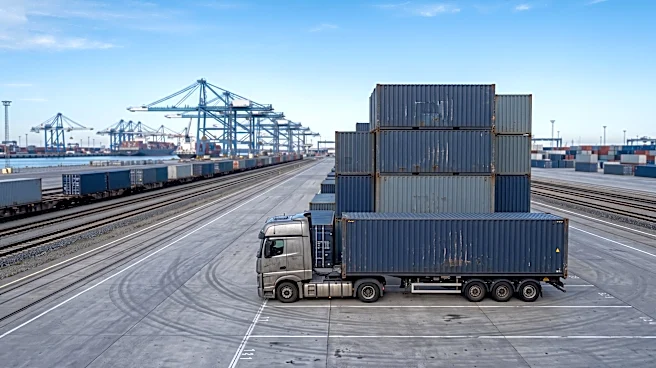
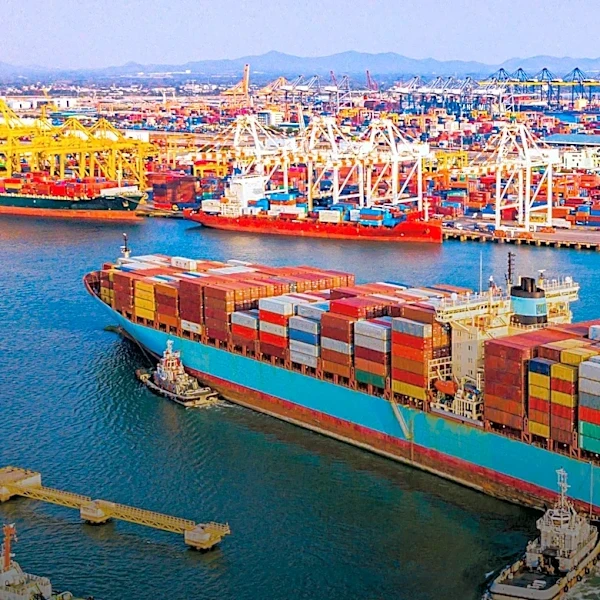
supply chains as the year-end approaches. These include tighter truckload capacity, elevated fuel costs, and shifts in ocean networks and trade policies. The report emphasizes the critical need for early planning and flexible transportation strategies to navigate market volatility. It provides updated insights across various freight sectors such as truckload, less-than-truckload (LTL), intermodal, air freight, ocean shipping, and ports and drayage. Specific challenges noted are rising costs due to tighter truckload capacity and targeted LTL pricing changes, technology demand impacting air freight, and ocean port congestion limiting capacity. The report also examines cross-border conditions between the U.S., Canada, and Mexico, noting uneven conditions in U.S.-Mexico corridors due to manufacturing changes and imbalanced freight flows, alongside pressure on Canada-U.S. freight from higher fuel costs and driver availability.
Why It's Important?
The C.H. Robinson Edge Report is crucial for U.S. businesses and logistics leaders as it provides actionable intelligence to manage supply chain complexities and costs. The insights into tighter truckload capacity and elevated fuel costs directly impact transportation budgets and operational efficiency for companies across all sectors. Understanding these trends allows businesses to anticipate potential disruptions and adjust their strategies to mitigate financial risks. The report's focus on global trade dynamics, including U.S.-China and Canada trade relations, tariff refunds, and potential new customs requirements, is vital for companies engaged in international trade, as these factors can significantly affect import/export costs and timelines. Furthermore, the sector-specific perspectives for retail, automotive, energy, and healthcare supply chains offer tailored guidance, helping industries address unique challenges such as lingering shipping disruptions in retail, nearshoring in automotive, and pharmaceutical reshoring in healthcare. The detailed analysis of diesel fuel costs, driven by diminished refining capacity and low inventories, is particularly important for any business relying on freight transportation, as it directly influences overall logistics expenses for 2027.
What's Next?
The insights provided in the November 2026 Edge Report are intended to help logistics leaders and businesses prepare for the evolving market conditions in the coming months. Shippers are advised to prioritize early planning and adopt flexible transportation strategies to adapt to ongoing volatility. The report's findings suggest that companies should continue to monitor fuel costs, capacity constraints, and international trade policy changes closely. Businesses may need to explore alternative transportation modes or adjust their inventory management practices to counter rising costs and potential delays. The emphasis on technology demand in air freight and port congestion indicates a continued need for investment in digital solutions and diversified port strategies. As election results are noted to affect transportation funding decisions, businesses should also stay informed about potential policy shifts that could impact infrastructure and logistics support. The report serves as a guide for strategic decision-making, encouraging proactive measures to maintain supply chain resilience and efficiency through year-end and into 2027.
Beyond the Headlines
The C.H. Robinson Edge Report's detailed analysis points to a broader trend of increasing complexity and cost in global supply chains, driven by a confluence of economic, geopolitical, and environmental factors. The persistent issue of elevated fuel costs, exacerbated by diminished refining capacity, highlights the vulnerability of the transportation sector to energy market fluctuations and underscores the ongoing need for sustainable energy solutions and fuel efficiency innovations. The report's mention of shifting ocean networks and trade policy reflects a global re-evaluation of supply chain resilience, moving away from purely cost-driven models towards more diversified and secure sourcing strategies. This could lead to increased nearshoring or reshoring efforts, particularly in critical sectors like healthcare, impacting manufacturing footprints and regional economic development. The reliance on expert analysis and market data in the report also signifies the growing importance of data-driven decision-making in logistics, pushing companies to invest more in advanced analytics and predictive modeling to navigate an increasingly unpredictable global trade landscape. The report implicitly suggests that businesses that fail to adapt to these evolving conditions risk significant competitive disadvantages.