




What's Happening?
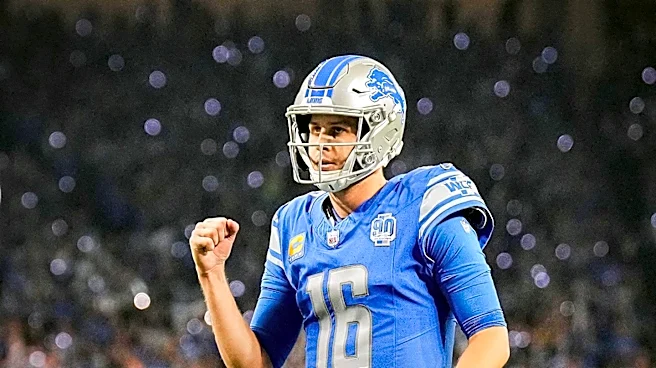
An ESPN Football Power Index (FPI) simulation, specifically simulation No. 9,187, has predicted a dream 2026 NFL season for the Detroit Lions. This simulation projects the Lions to achieve an NFL-best 13-4 record, tied with the San Francisco 49ers, and
ultimately win Super Bowl LXI against the Los Angeles Chargers. The simulated playoff run for Detroit includes victories over the Green Bay Packers in the Wild Card round (27-24), the Dallas Cowboys in the Divisional round (27-20), and the Los Angeles Rams in the NFC Championship Game (20-17). The Super Bowl victory is depicted as a thrilling contest, with the Lions securing the win on a 42-yard field goal by Jake Bates as time expired, following a late lead change by the Chargers. The simulation also notes Aidan Hutchinson winning Defensive Player of the Year over Myles Garrett and the Chicago Bears finishing with a 6-11 record.
Why It's Important?
This simulation, while random, highlights the growing optimism and expectations surrounding the Detroit Lions franchise. For years, the Lions have struggled, but recent seasons have shown significant improvement, fostering a renewed sense of hope among their fanbase. A simulated Super Bowl win, even if hypothetical, can energize the fan base, increase media attention, and potentially influence future fan engagement and merchandise sales. From a broader NFL perspective, such simulations contribute to pre-season narratives and discussions, shaping public perception of team strengths and weaknesses. It also underscores the analytical capabilities of systems like ESPN's FPI, which use extensive data to project outcomes, even if individual simulations are not meant to be definitive predictions. The scenario of defeating long-standing rivals and a former quarterback adds a compelling narrative layer for fans.
What's Next?
While this is a simulation for the 2026 season, its immediate impact is primarily on fan discussion and media narratives leading into upcoming NFL seasons. The Detroit Lions will continue to build their roster and develop their players, aiming to turn such simulated successes into real-world achievements. The team's performance in the actual 2024 and 2025 seasons will be crucial in determining if they can indeed reach the heights predicted by this FPI simulation. Fans will likely use this simulation as a talking point, fueling anticipation and debate about the team's potential. For ESPN, these simulations will continue to be a feature of their sports analysis, providing engaging content and data-driven insights into future sports outcomes.
Beyond the Headlines
The fascination with sports simulations like ESPN's FPI reflects a broader cultural trend of using data analytics and predictive modeling to understand and anticipate complex events. In sports, these models offer a blend of entertainment and statistical insight, allowing fans to engage with 'what-if' scenarios. This particular simulation, by envisioning a Super Bowl win for a historically less successful franchise like the Lions, taps into the underdog narrative that resonates deeply within sports culture. It also subtly touches upon the emotional investment fans have in their teams, where even a hypothetical victory can provide a sense of catharsis and hope. The mention of specific player achievements and rivalries within the simulation further illustrates how these models attempt to capture the nuanced dynamics of professional sports, moving beyond mere win-loss records to include individual accolades and narrative arcs.