
What's Happening?
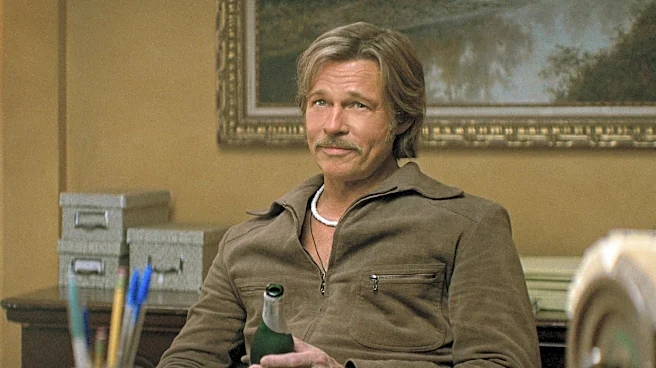
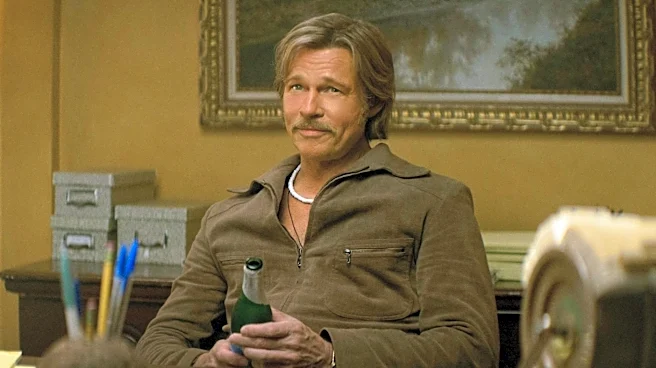
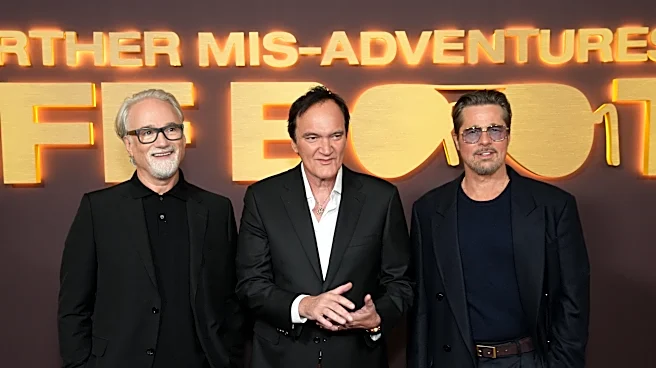
Director David Fincher has revealed his approach to adapting Quentin Tarantino's 230-page screenplay for 'The Further Mis-Adventures Of Cliff Booth.' Despite an initial 60-page reduction approved by Tarantino, Fincher further compressed the dialogue without
removing any scenes from the version he shot. This process involved significantly shortening lengthy conversations, such as a film criticism speech delivered by Elizabeth Debicki's character, Karen Crosby, which was two pages longer in the original script. Fincher stated that most scenes in the screenplay were eight, nine, or ten pages long, necessitating this compression to fit the cinematic format while preserving the narrative structure. The film is set to open in IMAX theaters on November 25 and will be available on Netflix starting December 23.
Why It's Important?
This directorial decision highlights the intricate balance between a screenwriter's original vision and a director's interpretation for the screen. Tarantino is known for his extensive dialogue, and Fincher's method of retaining all scenes while condensing conversations offers a unique case study in film adaptation. It demonstrates how a director can maintain the narrative integrity and character arcs of a verbose script while making it suitable for a visual medium. This approach could influence future adaptations of dialogue-heavy works, showcasing a strategy to honor the source material's breadth while enhancing its pacing and flow for a wider audience. The collaboration also underscores the creative negotiations that occur between prominent figures in the film industry.
What's Next?
The film, 'The Further Mis-Adventures Of Cliff Booth,' will first be released in IMAX theaters on November 25, followed by its streaming debut on Netflix on December 23. Following the film's release, Quentin Tarantino's novelization, 'The Adventures Of Cliff Booth,' is scheduled to arrive in December. This novelization is expected to offer a more complete version of the story, potentially including the dialogue and scenes that Fincher trimmed or compressed. Film enthusiasts and completists will have the opportunity to compare Tarantino's written version with Fincher's cinematic adaptation, providing insights into the creative choices made during the production process and the differences between the two mediums.
Beyond the Headlines
Fincher's candid remarks about achieving only 60-65% of his original vision for the film, while still considering it a good outcome for his career, offer a rare glimpse into the self-critical nature of acclaimed directors. This perspective challenges the common perception of a finished film as a perfect realization of a director's initial concept. It suggests that the filmmaking process is often a series of compromises and refinements, even for established artists. The comparison between Tarantino's expansive script and Fincher's compressed film, alongside the upcoming novelization, provides a unique opportunity to explore the artistic tension between textual depth and visual efficiency, and how different mediums shape storytelling.