







What's Happening?
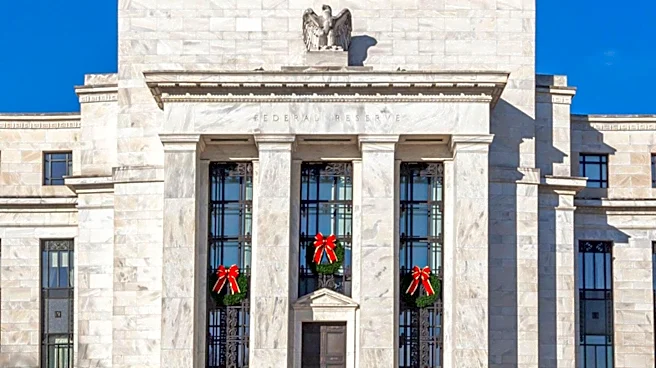
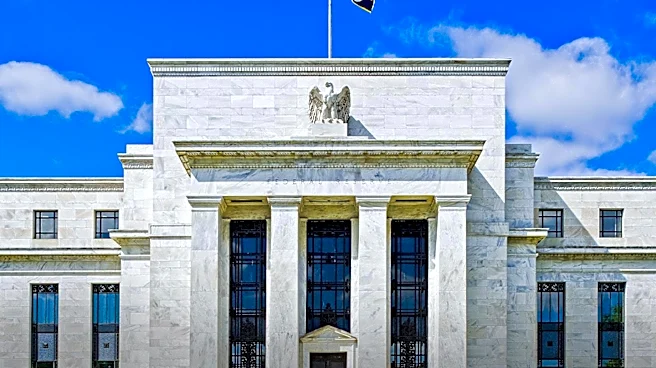
The Federal Reserve is maintaining a cautious stance on interest rates as inflation remains above its 2% target. Despite a recent decision to hold the federal funds target range at 3.50% to 3.75%, the Fed continues to prioritize inflation control. Recent
labor data, including a nonfarm payroll increase of 57,000 and a drop in the unemployment rate to 4.2%, has softened the immediate case for a rate hike. However, the labor force's contraction by 720,000 adds complexity to the economic outlook. The market is closely watching upcoming Federal Open Market Committee (FOMC) minutes for further insights into the Fed's policy direction.
Why It's Important?
The Fed's approach to managing inflation is critical for economic stability. Persistent inflation above the target can erode purchasing power and affect economic growth. The mixed labor data complicates the Fed's decision-making, as a strong labor market typically supports rate hikes to curb inflation. However, the recent payroll miss and labor force contraction suggest caution. The Fed's decisions will impact borrowing costs, consumer spending, and business investments, influencing the broader U.S. economy. Investors and businesses are particularly attentive to the Fed's signals, as they adjust strategies based on anticipated monetary policy shifts.
What's Next?
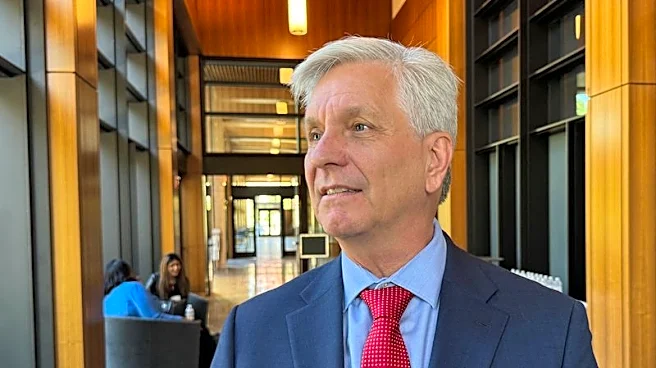
The release of the FOMC minutes will provide further clarity on the Fed's inflation outlook and potential rate hikes. Market participants are also monitoring upcoming economic indicators, such as the S&P Global U.S. Services PMI and ISM Services PMI, for additional insights into economic health. Fed Governor Christopher Waller's remarks and global economic developments, including oil price fluctuations and geopolitical tensions, will also influence market expectations. The Fed's next moves will be closely scrutinized, as they will set the tone for economic policy in the coming months.