




What's Happening?
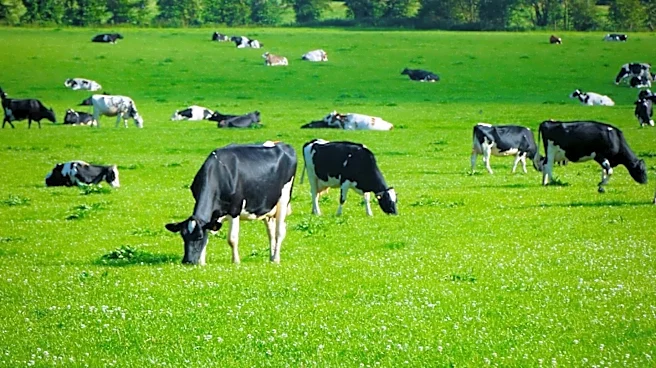
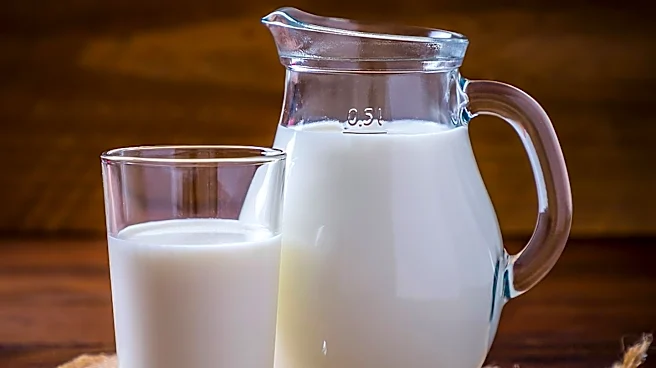
A recent ranking of the world's most valuable food commodities has placed milk at the top, with a gross production value of $379 billion in 2024. This ranking, based on data from the UN Food and Agriculture Organization, highlights the economic significance
of various food commodities. Following milk, rice and pork are the second and third most valuable commodities, respectively. The list includes a diverse range of products, from staple grains and livestock to fruits and vegetables. The combined value of the top 40 commodities amounts to approximately $4.3 trillion, underscoring the vast scale of global agricultural production.
Why It's Important?
The ranking of food commodities by value provides insight into global agricultural trends and economic priorities. Milk's position as the most valuable commodity reflects the extensive scale of dairy production worldwide, particularly in regions like Asia. The prominence of animal products in the top rankings highlights the growing demand for meat and dairy, driven by rising incomes and changing dietary preferences in middle-income countries. Understanding these trends is crucial for policymakers, businesses, and investors as they navigate the complexities of global food supply chains. The data also emphasizes the importance of sustainable agricultural practices to meet increasing demand while addressing environmental concerns.
What's Next?
Looking ahead, livestock production is projected to grow by 15% by 2035, outpacing crop production. This growth is expected to be driven by increased consumption of animal products in developing regions. As demand for these commodities rises, there will be a need for innovations in agricultural technology and practices to enhance productivity and sustainability. Additionally, the ranking may influence investment decisions in the agricultural sector, as stakeholders seek to capitalize on high-value commodities. The ongoing analysis of food commodity values will continue to shape discussions on food security, trade policies, and environmental impacts.