






What's Happening?
The Driskill Grill, a historic restaurant in Austin, has undergone a significant refresh, modernizing its public spaces while preserving its original character. The renovation, overseen by MML Hospitality, which now manages the hotel's food and beverage
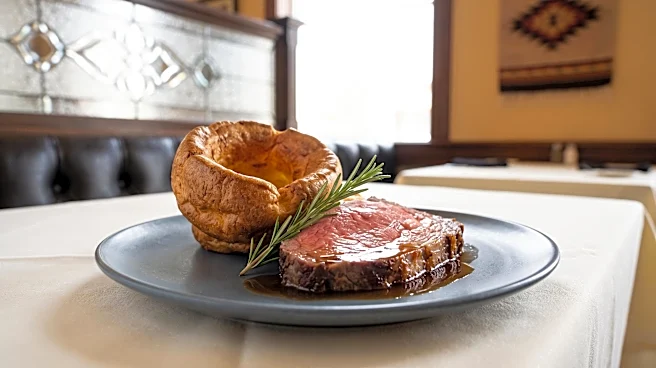
operations, has brought new energy to the dining room, which was previously noted for being sparsely occupied. James Beard Award winner April Bloomfield has been brought in as creative director, with Chef Nick Erven serving as executive chef. The menu retains its classic American chophouse focus with dry-aged meats but incorporates elements of Bloomfield's British culinary background, such as an enormous Yorkshire pudding served with prime rib. The cocktail program has also been expanded, featuring 26 drinks. While the ambiance has been revitalized with additional booths, new taxidermy, and Southwestern artwork, elements like the leather booths, ornate glass dividers, and green carpet from its 1930 opening remain, creating a blend of old and new.
Why It's Important?
The revitalization of The Driskill Grill is important for Austin's culinary and cultural landscape. As a long-standing institution, its renewed vibrancy contributes to the preservation of the city's historic landmarks while adapting to contemporary dining expectations. The involvement of acclaimed culinary figures like April Bloomfield and Nick Erven elevates the restaurant's profile, potentially attracting both local diners and tourists, thereby boosting the local economy and hospitality sector. The blend of classic American chophouse fare with British influences introduces a unique culinary experience to the city, enriching its diverse food scene. A bustling, successful restaurant like The Driskill Grill can also serve as a benchmark for other historic establishments looking to refresh their offerings, demonstrating how to balance tradition with innovation. Furthermore, the increased foot traffic and positive buzz around the restaurant can have a ripple effect on surrounding businesses in downtown Austin, contributing to the overall economic health of the area.
What's Next?
The Driskill Grill will continue to operate with its refreshed menu and ambiance, aiming to solidify its position as a premier dining destination in Austin. The management will likely focus on refining service aspects, which the source notes still need some work, to match the elevated culinary experience. Continued efforts to attract and retain a diverse clientele, from date-night couples to business diners, will be crucial for sustained success. The restaurant may also explore seasonal menu changes or special events to keep its offerings fresh and engaging. The impact of the new culinary direction and the revitalized atmosphere will be closely watched by food critics and the public, influencing its reputation and potential for further accolades. The success of this renovation could also inspire similar revitalization projects in other historic hotels and restaurants across the country, as establishments seek to remain relevant and competitive in a dynamic hospitality market.
Beyond the Headlines
Beyond its immediate impact on the dining scene, the Driskill Grill's renovation touches upon broader themes of urban development and the evolving identity of historic cities. The successful integration of modern elements with historical preservation reflects a growing trend in urban planning, where cities strive to maintain their unique character while embracing progress. The shift from a quiet, almost empty dining room to a bustling, energetic space also speaks to changing consumer preferences and the demand for dynamic, experiential dining. The restaurant's ability to attract a younger, more diverse crowd, including 'gaggles of Instagram devotees,' highlights the influence of social media on contemporary dining culture and the importance of creating visually appealing and shareable experiences. This transformation also underscores the economic value of heritage tourism and the role that iconic establishments play in shaping a city's brand and appeal to visitors. The Driskill Grill's journey serves as a case study in how historic venues can adapt and thrive in the 21st century.