







What's Happening?
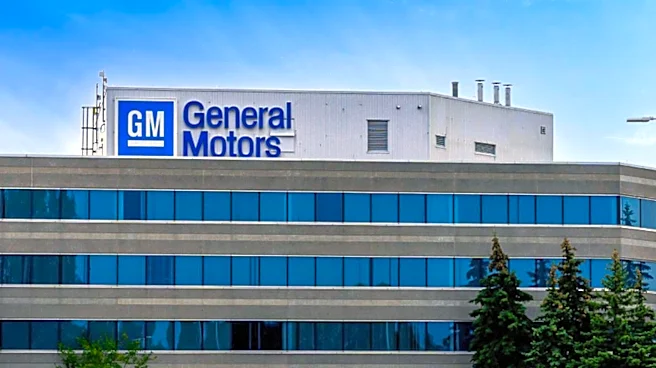
General Motors (GM) announced on October 20 that its board approved a new $20 billion multi-year share repurchase authorization with no expiration date. This decision comes as GM's shares have remained essentially flat for 2026, despite a 17% increase
over the past 12 months. The buyback aims to reduce the number of outstanding shares, thereby increasing earnings per share (EPS). GM's shares outstanding decreased from 904 million at the end of 2025 to 849 million, contributing to a third-quarter adjusted EPS of $3.70, which surpassed the $3.63 consensus. CFO Paul Jacobson stated that repurchases will continue 'as long as the valuation remains depressed.' GM also noted approximately $2 billion in commodity, logistics, and memory chip costs this year, along with EV restructuring payments extending into 2027. The company is also moving its stock listing from the New York Stock Exchange to Nasdaq on November 17.
Why It's Important?
This $20 billion stock buyback is a significant financial maneuver by GM, signaling management's confidence in the company's future profitability and its commitment to returning value to shareholders. By reducing the share count, the buyback can boost EPS, making the stock appear more attractive to investors, even if the overall share price remains stagnant. The move to Nasdaq is also intended to enhance GM's image as a technology-driven company and potentially increase its share price and inclusion in the Nasdaq 100 index. However, for individual investors, particularly those with concentrated holdings in GM stock within their retirement accounts, a buyback does not mitigate the risk of a stock price decline. The decision reflects a strategic allocation of capital, balancing investments in future technologies like EVs with direct shareholder returns.
What's Next?
GM's stock will officially move to the Nasdaq on November 17, a move intended to burnish its tech credentials and potentially influence its share price. CEO Mary Barra anticipates a strong performance in 2027, contingent on sustained demand and easing costs. The $20 billion buyback authorization provides GM with flexibility to repurchase shares over an extended period, influencing its EPS and potentially its stock valuation. Investors will closely monitor the execution of this buyback program and its impact on GM's financial metrics. The company's ongoing management of commodity costs, logistics, and EV restructuring payments will also be critical factors in its financial performance and investor sentiment in the coming years.
Beyond the Headlines
The authorization of a substantial stock buyback by GM, despite its flat share performance and ongoing investments in transformative technologies like EVs, highlights a common corporate strategy that can have complex implications for different stakeholders. While buybacks can benefit shareholders by increasing EPS and potentially stock value, they also represent capital that could otherwise be invested in research and development, infrastructure, or employee benefits. For long-term investors, especially retirees with significant portions of their portfolios in a single stock, buybacks do not address the inherent risks of concentrated holdings. This situation underscores the importance of diversified investment strategies and careful financial planning, particularly concerning retirement accounts, where tax implications and market volatility can significantly impact an individual's financial security.