




What's Happening?
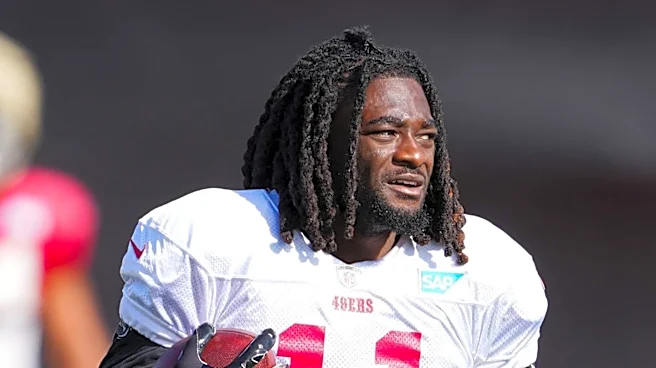
San Francisco 49ers running back Christian McCaffrey has been absent from practice for over a week due to what the team describes as 'tightness.' This prolonged absence has led to speculation from NFL insider Mike Florio of Pro Football Talk, suggesting
that McCaffrey's reduced practice workload could be a 'hold-in' tactic to secure an adjustment to his current contract. McCaffrey is scheduled to receive $12.5 million in non-guaranteed cash in 2026. The 49ers have maintained that they are being cautious with their star player to prevent a minor issue from escalating into a more significant injury that could impact regular-season games. However, the specific area of his body experiencing tightness has not been disclosed by the team. This situation arises amidst recent significant contract extensions for other prominent running backs in the NFL, such as Bijan Robinson of the Atlanta Falcons and Jahmyr Gibbs of the Detroit Lions, whose new deals have pushed the average annual salary for top running backs higher than McCaffrey's current average of $19 million.
Why It's Important?
This situation is important for several reasons, primarily concerning player contracts, team management, and the financial dynamics of the NFL. For the San Francisco 49ers, the potential 'hold-in' by a key offensive player like McCaffrey could disrupt team chemistry and preparation for the upcoming season. McCaffrey was a central figure in the 49ers' offense in 2025, leading the NFL in touches and accumulating significant rushing and receiving yards, making him an indispensable asset. His absence, whether due to genuine injury or contract leverage, highlights the ongoing tension between player value and team salary cap management. For other NFL players, particularly running backs, this situation could set a precedent or influence future contract negotiations, especially given the recent surge in high-value contracts for players at the position. The outcome of this situation could impact how teams approach managing star players' health and contract demands, potentially leading to more proactive contract adjustments to avoid similar scenarios.
What's Next?
The immediate next steps will involve monitoring McCaffrey's return to practice and any official statements from the San Francisco 49ers regarding his health or contract status. If the 'tightness' persists or if McCaffrey continues to be sidelined, pressure will likely mount on the team to address the underlying issues, whether they are physical or contractual. The 49ers will need to decide whether to offer a contract adjustment to McCaffrey to ensure his full participation and commitment, especially given his critical role in their offense. Conversely, McCaffrey will need to weigh the risks of a prolonged 'hold-in' against the potential benefits of a new deal. The situation could also lead to increased scrutiny from the NFL Players Association regarding player welfare and contract fairness. The performance of other running backs during McCaffrey's absence, and how the team manages without him, will also be closely watched as the regular season approaches.
Beyond the Headlines
Beyond the immediate concerns, this situation touches upon broader themes within professional sports, including player empowerment, the evolving market value of running backs, and the psychological aspects of contract disputes. The 'tightness' narrative, whether entirely truthful or partially a strategic maneuver, underscores the complex relationship between athletes, their health, and their financial aspirations. It highlights the ethical considerations for teams in managing player injuries, especially when significant financial stakes are involved. Furthermore, the recent trend of lucrative running back contracts suggests a potential shift in how the position is valued across the league, moving away from previous perceptions of running backs as more expendable. This could lead to a re-evaluation of contract structures and guaranteed money for skill positions, potentially influencing future collective bargaining agreements between the NFL and the NFLPA. The incident also serves as a reminder of the constant negotiation and leverage dynamics inherent in professional sports.