






What's Happening?
Urbotbox Construction Robotics, an early-stage robotics startup, is actively seeking Robotics Systems Engineers to advance the development of its autonomous, mobile robotic platforms. These platforms are designed for the commercial construction and equipment
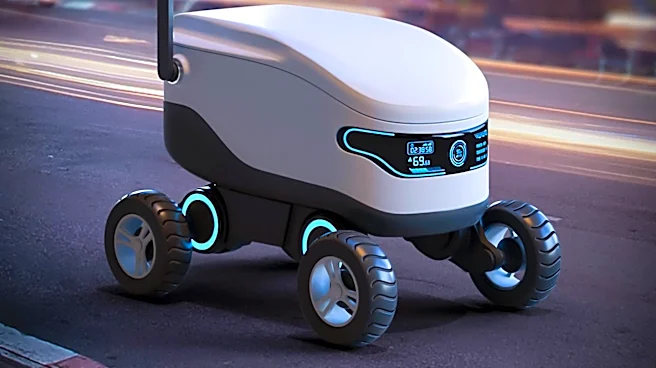
rental sectors. The company's flagship product is a three-wheeled electromechanical platform intended to autonomously follow workers on job sites, transport tools, equipment, and materials, and perform specific trade-related tasks. Product development is currently two-thirds complete, with mechanical engineering led by Swope Design Solutions. Core control models, including Follow-Along, Remote Control, ROS2, and SLAM navigation, are established. The immediate focus is on consolidating these systems into a unified architecture, custom PCB design, and a dedicated remote/mobile app interface.
Why It's Important?
This recruitment drive signifies a critical phase in the development of robotics for the U.S. construction industry, an sector traditionally slow to adopt advanced automation. The successful deployment of Urbotbox's platforms could significantly enhance productivity, improve safety by reducing manual labor for strenuous tasks, and address labor shortages in construction. For businesses in the construction and equipment rental sectors, these robots offer the potential for increased efficiency and cost savings. The demand for engineers with expertise in multidisciplinary robotics execution, embedded software, and compute platforms like Nvidia Jetson Orin Nano and Raspberry Pi highlights the growing need for specialized talent in the evolving robotics landscape. This initiative could also spur further innovation and investment in construction technology.
What's Next?
The immediate next step for Urbotbox is to hire hands-on, multidisciplinary Junior Robotics Systems Engineers to serve as Technical Product Owners and Systems Architects. These engineers will be responsible for evaluating existing engineering assets, validating technical architecture, and driving product execution from late-stage prototyping to an investor-ready Minimum Viable Product (MVP). The company aims to consolidate its software and hardware systems, refine its custom PCB design, and finalize its remote/mobile app interface. Successful recruitment and product development will pave the way for further fundraising and strategic business development, ultimately leading to the commercialization and deployment of these autonomous construction robots in the market.
Beyond the Headlines
The development of autonomous robots for construction sites carries significant implications beyond immediate productivity gains. Ethically, it raises questions about job displacement for manual laborers and the need for retraining programs to equip workers with skills to operate and maintain these advanced machines. Legally, the deployment of autonomous vehicles on dynamic and often hazardous construction sites will require new regulatory frameworks concerning safety, liability, and operational standards. Culturally, it represents a shift in the perception of construction work, moving towards a more technologically integrated and data-driven environment. This could attract a new generation of tech-savvy workers to the industry, transforming its traditional image and operational practices.