






What's Happening?
NIKO JUNE, an interdisciplinary art studio based in Copenhagen, is offering limited and exclusive collections that exemplify Scandinavian minimalism. Their designs blend this aesthetic with spontaneous elements, focusing on collectibles and environmental
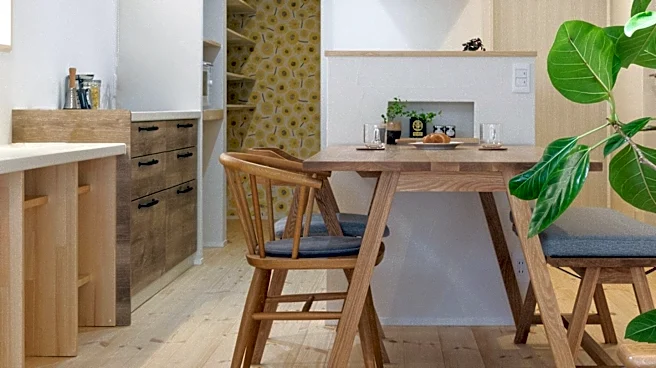
awareness. The studio produces a range of items, from ceramic mugs and glassware to sophisticated furniture, all made from recycled materials with sustainability as a core principle. Similarly, Toteme is recognized for its adherence to Scandinavian minimalism, featuring timeless pieces such as the Belted wool-doublé wrap coat and the Palmellato leather shoulder bag. This design philosophy is also evident in kitchen architecture, characterized by light, functional, and uncluttered spaces that incorporate light wood, stone, and glass, predominantly in white, cream, and pale gray color palettes.
Why It's Important?
The prominence of Scandinavian minimalism, as showcased by brands like NIKO JUNE and Toteme, reflects a growing consumer preference for sustainable, functional, and aesthetically clean designs in the U.S. market. This trend impacts various industries, from home goods and furniture to fashion, by emphasizing durability, eco-friendliness, and timelessness over fleeting trends. For consumers, it offers products that are often perceived as investments due to their quality and enduring style, potentially reducing the cycle of fast consumption. For businesses, embracing this aesthetic can lead to stronger brand loyalty among environmentally conscious buyers and those seeking long-lasting, versatile items. The focus on recycled materials also highlights a broader shift towards circular economy principles, influencing manufacturing processes and supply chain decisions across sectors.
What's Next?
The continued success of brands like NIKO JUNE and Toteme suggests a sustained demand for Scandinavian minimalist designs. This could lead to more U.S. retailers and designers incorporating similar principles into their product lines, focusing on sustainable materials, functional aesthetics, and timeless appeal. We may see an increase in collaborations between international minimalist brands and U.S. companies, further integrating this style into the American consumer landscape. Additionally, the emphasis on recycled materials and environmental awareness is likely to become a more significant factor in consumer purchasing decisions, pushing industries to innovate in sustainable production methods. This trend could also influence interior design and architectural practices, with a greater adoption of light, uncluttered, and natural material-focused spaces in residential and commercial developments.
Beyond the Headlines
The embrace of Scandinavian minimalism extends beyond mere aesthetics; it reflects a deeper cultural shift towards conscious consumption and a desire for simplicity in an increasingly complex world. Ethically, the commitment to recycled materials and sustainable practices, as demonstrated by NIKO JUNE, challenges traditional manufacturing norms and promotes a more responsible approach to resource utilization. This movement encourages consumers to invest in fewer, higher-quality items, fostering a sense of intentionality and reducing waste. Culturally, it signifies a rejection of excessive ornamentation and a return to fundamental principles of form and function, influencing not only what people buy but also how they organize and perceive their living and working environments. This shift could have long-term implications for consumer values, prioritizing longevity and environmental impact alongside design.