

What's Happening?
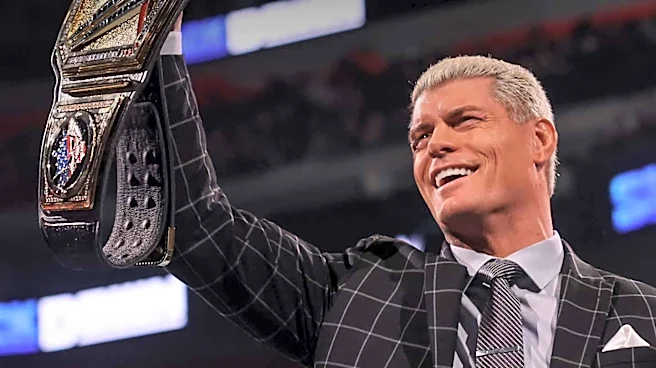
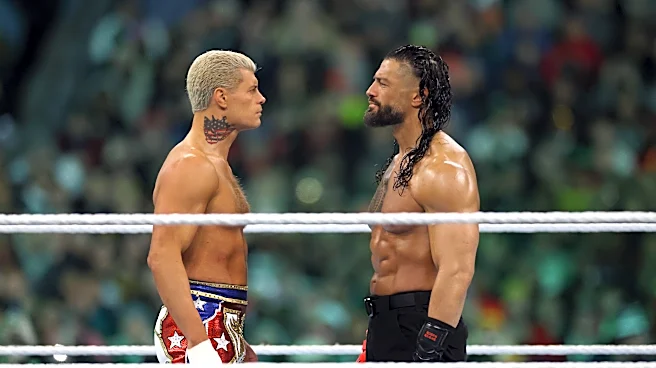
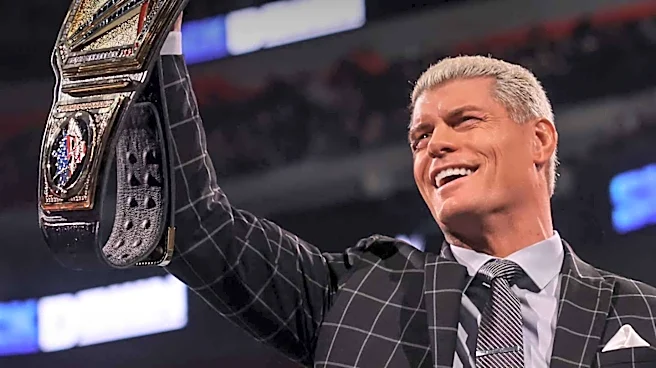
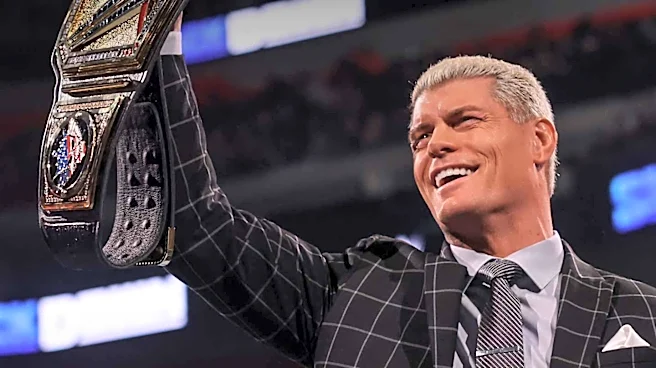
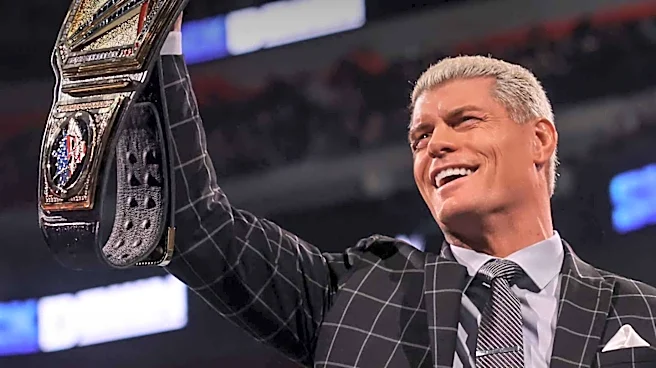
Cody Rhodes has outlined a radical approach to a potential heel turn in WWE, stating that if he were to become a villain, he would deliver only one explanation to the audience and then cease cutting promos entirely. Speaking on The Ebro Laura Rosenberg
Show, Rhodes expressed his openness to a heel turn but emphasized that his version would not be a 'cool heel' persona. Instead, he aims for a genuinely disliked character, distinct from simply being booed. He suggested that his single explanation would address frustrations he perceives from fans, who he feels hold him to an 'impossible standard.' Rhodes believes that after this initial statement, someone else would be responsible for cutting promos on his behalf, marking a significant departure from his current character, which heavily relies on his microphone work.
Why It's Important?
Cody Rhodes's proposed heel turn strategy, particularly the cessation of promos, represents a highly unconventional and potentially impactful shift in professional wrestling character development. In an industry where verbal communication is a cornerstone of character building and audience connection, Rhodes's plan to largely remain silent after an initial explanation could create a unique and compelling villain. This approach challenges traditional wrestling tropes and could force audiences to interpret his character through actions rather than words, potentially generating a deeper, more visceral reaction. It also highlights Rhodes's desire to avoid the 'cool heel' archetype, aiming for a character that genuinely alienates fans, which could be a powerful tool for driving new storylines and elevating other 'babyface' competitors.
What's Next?
While Rhodes has expressed openness to a heel turn, there are no immediate indications that WWE plans to implement this change. His current role as a 'babyface' and captain of Team USA at Survivor Series suggests he remains in a heroic capacity. However, his detailed vision for a heel turn could influence future creative decisions within WWE. If a turn were to occur, the execution of his 'one-time explanation' and subsequent silence would be a critical moment, setting the tone for his new persona. The wrestling community will likely continue to speculate on the timing and circumstances under which such a drastic character shift might take place, and how it would be received by the fanbase.
Beyond the Headlines
Rhodes's contemplation of a heel turn and his specific vision for it delve into the psychological complexities of character portrayal in professional wrestling. His desire to be 'genuinely disliked' rather than a 'cool heel' reflects a nuanced understanding of audience perception and the evolving nature of villainy in modern entertainment. This approach could be seen as a commentary on the current wrestling landscape, where many 'heels' inadvertently gain popularity due to their charisma or compelling arguments. By stripping away the verbal component, Rhodes aims to create a more primal, action-driven antagonist, forcing fans to confront their expectations of what a wrestling villain should be. This could lead to a re-evaluation of how 'heel' characters are constructed and perceived, potentially influencing future character development across the industry.