







What's Happening?
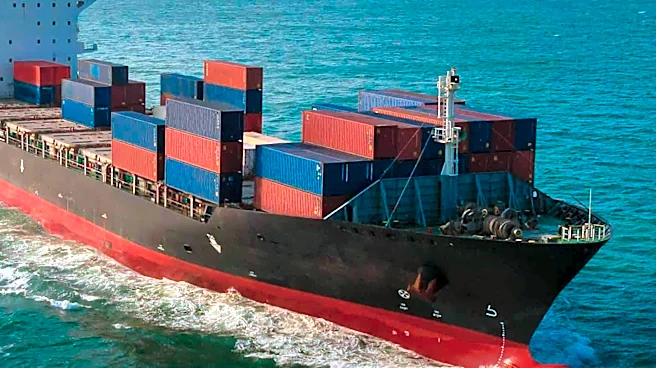
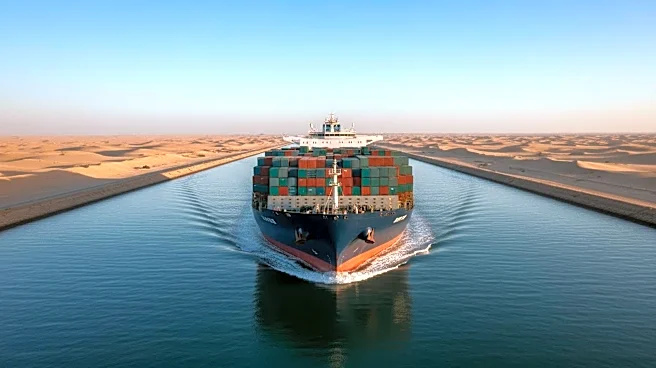
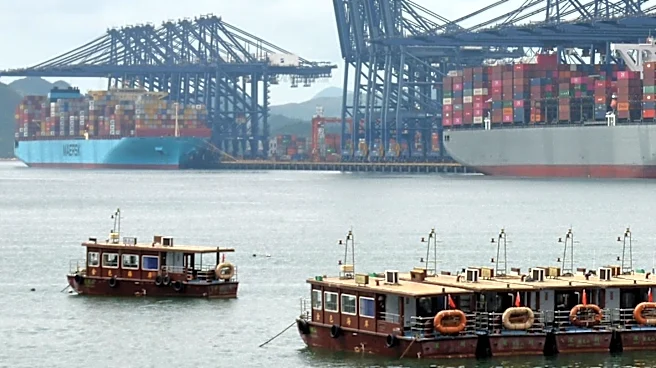
Maersk has announced the resumption of a second route through the Suez Canal and Red Sea, utilizing U.S.-flagged vessels. This decision follows a previous suspension due to security concerns involving hostilities and threats from the Houthis. The Maersk Denver,
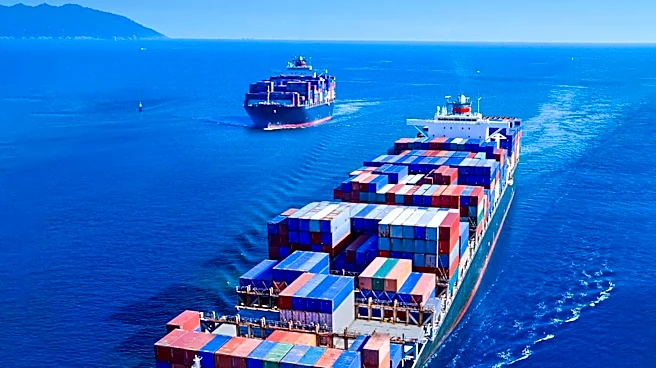
with a capacity of 6,200 TEU, is set to make the first westbound journey to India, while the Maersk Chicago, with a capacity of 6,188 TEU, will commence the first eastbound transit. The company reports that this structural change will significantly improve transit times, reducing them by an average of 7 days for westbound and 14 days for eastbound sailings. This move is part of Maersk's gradual return to the trans-Suez corridor, which had been abandoned in 2023 due to security threats.
Why It's Important?
The resumption of the Suez-Red Sea route by Maersk is significant for the global shipping industry, particularly for U.S. trade routes. By improving transit times, Maersk enhances the efficiency and competitiveness of its shipping services, potentially reducing costs for businesses relying on these routes. This development also indicates a stabilization of the security situation in the region, which could encourage other shipping companies to resume similar routes, thereby increasing capacity and potentially leading to lower shipping rates. However, the return to these routes also raises concerns about overcapacity in the container shipping sector, as new vessels continue to be added.
What's Next?
Maersk's decision to resume the Suez-Red Sea route is likely to prompt other shipping companies to reassess their routing strategies. As security conditions improve, more companies may follow suit, leading to increased traffic through the Suez Canal. This could result in competitive pricing and improved service offerings in the shipping industry. Additionally, stakeholders will be monitoring the security situation closely to ensure the safety of these routes. The potential for overcapacity remains a concern, and industry analysts will be watching how the market adjusts to these changes.