








What's Happening?
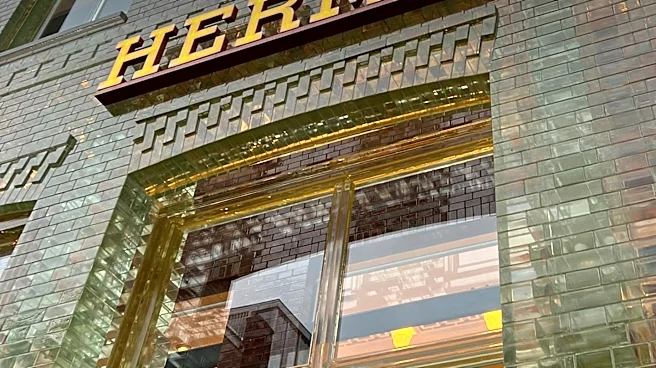
Hermès, along with other luxury brands like Cartier, is experiencing a significant downturn in sales in mainland China. According to two research firms surveyed by Bloomberg, sales for both brands in mainland China saw double-digit declines in August
and September compared to the previous year. This drop is particularly notable as Hermès International and Cie Financiere Richemont’s Cartier had previously shown relative resilience to a broader slowdown in luxury consumption that began in June. The weakness in China, one of Hermès' largest markets, has impacted its earnings, with the company reporting flat sales in the Asia-Pacific region (excluding Japan) for the third quarter. This performance fell short of analyst expectations for 1.55% growth, indicating that even ultra-luxury brands are not immune to the spending cuts by Chinese consumers. The macroeconomic environment in China remains challenging, compounded by sluggish financial markets and ongoing tax-related campaigns, as stated by Hermès chief financial officer Eric Du Halgouet.
Why It's Important?
The deepening slump in luxury sales in China for brands like Hermès signals a significant shift in consumer behavior among even the wealthiest Chinese. This trend challenges the long-held belief that the luxury industry's top-tier clients are largely recession-proof. Previously, global luxury brands relied on these high-net-worth individuals as China's middle class reduced spending due to a prolonged property-market slump and wider economic slowdown. Now, luxury houses face the prospect of both their key affluent customers and aspirational shoppers curtailing their spending simultaneously. This situation could lead to a re-evaluation of market strategies for luxury brands heavily dependent on the Chinese market. The shift in consumer preferences towards more understated products emphasizing craftsmanship and quality, or even pre-owned Western brands and new Chinese brands, suggests a structural problem rather than a temporary blip. This could force luxury brands to adapt their offerings and marketing approaches to cater to evolving tastes and economic realities in China.
What's Next?
Luxury executives are concerned that the current slump in China could become more widespread and persist until 2027. While comparisons might become less challenging in 2027 after a steep downturn in 2026, potentially leading to reported growth for major luxury groups, experts like Jacques Roizen, co-founder of Shanghai-based consultancy Foresight Performance Partners, caution that this may not signify a meaningful recovery in demand. Roizen suggests that the underlying pressures, including the aspirational middle-class moving away from luxury and wealthier consumers becoming more cautious, are unlikely to change quickly. This implies that luxury brands will need to prepare for a sustained period of altered market conditions in China. They may need to explore new growth strategies, potentially focusing on other resilient markets or further diversifying their product lines to appeal to changing consumer values, such as the rise of 'quiet luxury.'
Beyond the Headlines
The current luxury sales downturn in China highlights broader societal and economic shifts within the country. Beijing's widening scrutiny of offshore wealth and a cooling AI stock rally are impacting private fortunes, contributing to the cautious spending behavior of affluent consumers. This situation also reflects a cultural evolution among Chinese consumers, particularly younger shoppers, who are increasingly moving away from prominent logos and status-driven purchases. Instead, there's a growing preference for products that emphasize craftsmanship and quality, aligning with the 'quiet luxury' trend. This shift could have long-term implications for the global luxury industry, potentially leading to a redefinition of what constitutes luxury and how it is perceived and consumed. The increased availability of coveted items like Birkin and Kelly handbags, both in stores and on second-hand platforms, also challenges the traditional scarcity model that has underpinned the ultra-exclusive status of brands like Hermès, potentially impacting their brand equity and pricing power in the long run.