








What's Happening?
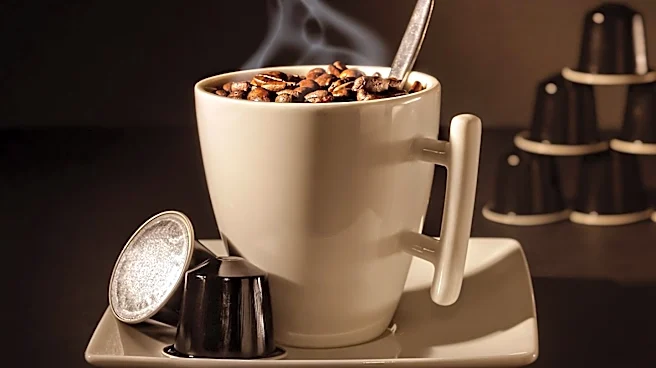
Lavazza has launched its Tablì Collection in the U.S., featuring a single-serve espresso machine that utilizes plastic-free coffee capsules. This system aims to address the environmental concerns associated with traditional plastic and aluminum coffee pods.
The Tablì brewer uses dense coffee pucks, or 'tabs,' which are inserted without individual packaging, producing an espresso-like beverage. The machine itself is compact and intuitive, with a 50-ounce water reservoir. While the system is designed to be low-waste, the coffee tabs are sold in paper trays sealed with a plastic layer for freshness, which may or may not be recyclable. This marks Lavazza's entry into the U.S. market with a capsule-less single-serve system, a significant step towards reducing plastic waste in the coffee industry. Other brands, like Keurig, are also developing compostable pod systems.
Why It's Important?
The introduction of Lavazza's plastic-free pod system is important for the U.S. market as it offers consumers a more environmentally friendly option for single-serve coffee. The widespread use of plastic coffee pods has contributed significantly to landfill waste, prompting growing consumer demand for sustainable alternatives and even government bans in some regions. By providing a system that eliminates plastic and aluminum waste from the brewing process, Lavazza is responding to these environmental concerns and potentially setting a new standard for the industry. This innovation could influence other coffee manufacturers to accelerate their efforts in developing sustainable packaging and brewing solutions, ultimately reducing the environmental footprint of the convenience coffee sector. Consumers who prioritize sustainability now have a new choice, which could shift market dynamics and encourage broader adoption of eco-conscious products.
What's Next?
The success of Lavazza's Tablì system in the U.S. market will likely be closely watched by competitors and consumers alike. If the system gains traction, it could spur further innovation in plastic-free coffee solutions from other major brands. Consumers can expect to see more options for compostable or plastic-free pods and brewing systems as companies vie for market share in the sustainable coffee segment. Lavazza may also expand its range of coffee tab flavors and roasts to cater to a wider audience, addressing the current limitation in selection. Additionally, there could be increased pressure on packaging manufacturers to develop fully recyclable or compostable sealing solutions for products like the Tablì tabs, further minimizing waste. The long-term impact could include a significant reduction in plastic waste generated by single-serve coffee consumption across the U.S.
Beyond the Headlines
Beyond the immediate environmental benefits, Lavazza's initiative highlights a broader shift in consumer values and corporate responsibility within the U.S. market. The demand for sustainable products is no longer a niche concern but a mainstream expectation, pushing companies to rethink their entire product lifecycle, from sourcing to disposal. This move by Lavazza could also spark discussions about the true cost of convenience, prompting consumers to consider the environmental impact of their daily routines. Furthermore, it underscores the potential for technological innovation to address complex environmental challenges, demonstrating that even seemingly small changes in product design can have a cumulative positive effect. The ethical implications of product packaging and waste management are becoming increasingly central to brand reputation and consumer loyalty, making sustainability a critical factor for long-term business success.