






What's Happening?
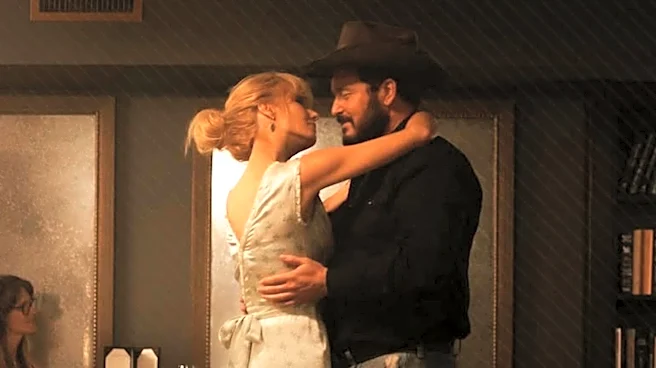
In the penultimate episode of 'Dutton Ranch' Season 1, a significant twist was revealed involving the 10-Petal ranch's corrupt practices. The episode, which aired on Paramount+, disclosed that the ranch was responsible for a food-and-mouth disease outbreak
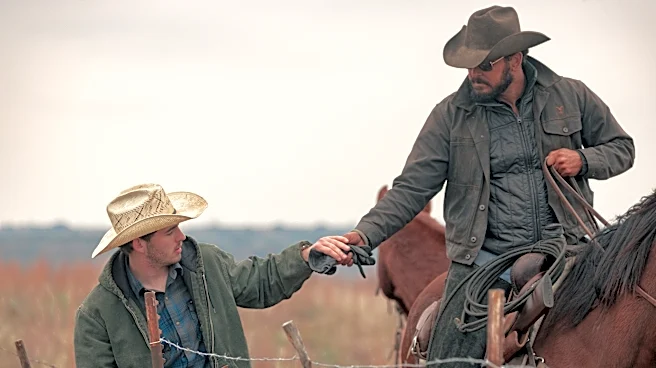
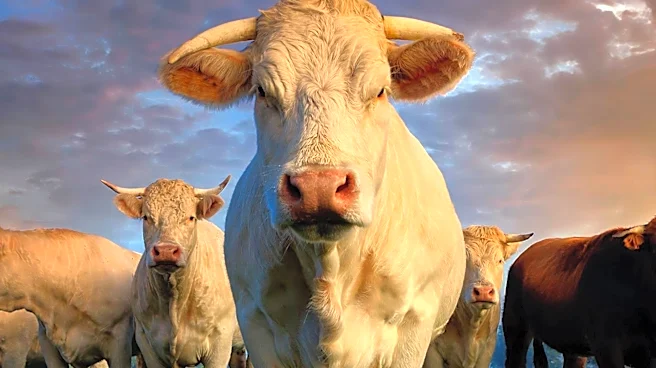
that led to the execution of Beth and Rip's entire herd of cattle. This revelation came after Austin, a cowboy at the 10-Petal ranch, decided to expose the corruption following the murders of his friends. The episode also highlighted internal family conflicts, with Beulah Jackson's sons, Rob-Will and Joaquin, feuding over the family ranch's inheritance. The episode set the stage for the season finale, with tensions rising as Joaquin recruits his father, Mariano, to aid in his schemes.
Why It's Important?
The exposure of the 10-Petal ranch's corrupt practices has significant implications for the cattle industry, highlighting issues of disease management and ethical practices in livestock operations. The storyline underscores the potential for widespread economic and health impacts due to unethical practices in agriculture. It also reflects broader societal concerns about transparency and accountability in business operations. The show's narrative may influence public perception and spark discussions about industry regulations and the importance of whistleblowers in uncovering corruption.
What's Next?
As the season finale approaches, viewers can expect further developments in the conflict between the Jackson family and the Dutton Ranch. The introduction of Mariano, Joaquin's father, suggests potential escalations in the storyline. The show's renewal for a second season indicates that these themes of corruption and family dynamics will continue to be explored, potentially leading to more revelations and consequences for the characters involved.
Beyond the Headlines
The storyline of 'Dutton Ranch' touches on deeper themes of loyalty, morality, and the personal cost of standing up against corruption. Austin's decision to expose the ranch's practices highlights the ethical dilemmas faced by individuals in corrupt systems. The show also explores the cultural significance of ranching in America, portraying the tension between traditional values and modern challenges. These elements contribute to a rich narrative that resonates with contemporary societal issues.