






What's Happening?
Australian AI firm Arvica has secured a $28 million investment commitment, announced in November 2026. The company operates a GPU cloud platform, providing compute capacity across Australia and the broader Asia-Pacific region. Arvica offers access to
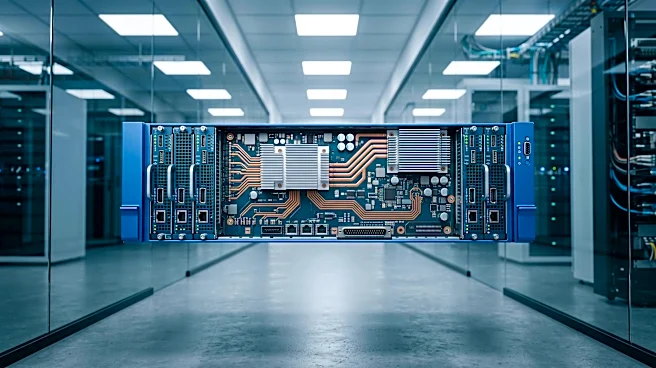
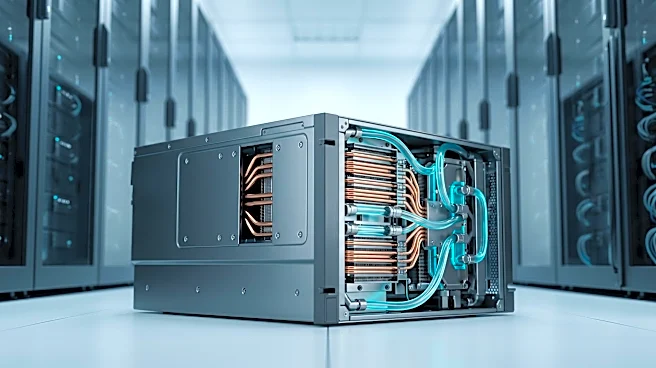
advanced Nvidia H200, B200, and B300 systems, ranging from hourly GPU access to enterprise-level clusters. The firm has also outlined plans for a liquid-cooled modular data center at Swanbank, Queensland, designed to accommodate next-generation hardware. This facility aims for an initial IT capacity of 600kW to 800kW, with a second stage expanding to approximately 2.2MW. Arvica emphasizes that the competitive landscape in AI infrastructure is shifting from raw GPU counts to energy efficiency and upgradeability, with their planned site targeting a power usage effectiveness of 1.3 or lower and rack densities of 150kW to 250kW, necessary for Nvidia's Blackwell and Rubin systems.
Why It's Important?
This investment highlights a significant trend in AI funding, particularly in Australia, where capital is heavily flowing into compute infrastructure rather than directly into AI product companies. A review indicated that data centers and compute infrastructure constituted about half of Australian startup funding in the first three quarters of 2026, while AI product companies raised considerably less. Arvica's focus on energy efficiency and upgradeability in its data center design reflects a critical evolution in the AI infrastructure market. As AI models become more complex and demanding, the ability to efficiently power and upgrade hardware will be crucial for competitive advantage. This investment could position Arvica as a key player in providing the foundational compute power necessary for AI development in the Asia-Pacific region, potentially influencing the pace and direction of AI innovation there.
What's Next?
Arvica's project is currently in its early stages. The company held a pre-lodgement meeting with Ipswich City Council on November 27, which is a planning step rather than a final development approval. The firm's target for service availability in early 2028 is contingent on several factors, including site readiness, securing grid connections, obtaining necessary regulatory approvals, and ensuring sufficient customer demand. The success of this investment will depend on whether the financing translates into deployed capacity and if Arvica can navigate the regulatory and logistical challenges of building out its data center infrastructure. Future developments will likely involve further planning approvals, construction progress, and securing initial clients for its advanced GPU cloud services.
Beyond the Headlines
The investment in Arvica underscores a broader strategic shift in the AI industry, where the underlying infrastructure—specifically high-performance, energy-efficient compute capacity—is becoming a critical bottleneck and a significant investment area. This trend suggests that companies providing the 'picks and shovels' for the AI gold rush, such as data center operators and GPU cloud providers, are poised for substantial growth. The emphasis on liquid-cooled modular data centers and high rack densities also points to the increasing demands of next-generation AI hardware, which requires more sophisticated cooling and power solutions. This could lead to a greater focus on sustainable and efficient data center designs globally, as the environmental impact of AI compute becomes a more prominent concern. The disparity in funding between AI infrastructure and AI product companies also raises questions about the long-term health of the AI ecosystem, suggesting a potential imbalance that could affect innovation in AI applications.