





What's Happening?
Fisker Inc., an electric vehicle manufacturer, filed for Chapter 11 bankruptcy protection in June 2024. This marks the second bankruptcy for founder Henrik Fisker's automotive ventures, following Fisker Automotive's bankruptcy in 2013. The company, which
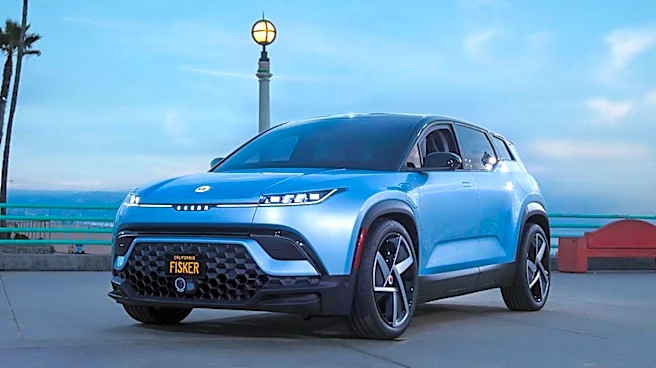
launched its all-electric SUV, the Fisker Ocean, in 2023, faced significant challenges in scaling production, managing software issues, and addressing customer service concerns. Despite an initial strategy to work with external manufacturing partners to reduce capital requirements, Fisker Inc. encountered substantial financial and operational difficulties. The bankruptcy proceedings highlight the inherent risks and substantial costs associated with launching and sustaining an independent automobile company, particularly in the competitive electric vehicle market. The company's struggles underscore the complexities of transforming ambitious electric vehicle concepts into viable, sustainable businesses, even with a focus on design and technology.
Why It's Important?
The bankruptcy of Fisker Inc. is a significant event for the U.S. automotive industry, particularly within the electric vehicle (EV) sector. It illustrates the immense capital requirements and operational hurdles faced by EV startups attempting to compete with established automakers. This development could lead to increased scrutiny from investors and lenders towards other emerging EV companies, potentially making it more challenging for them to secure funding. For consumers, the bankruptcy raises concerns about the long-term viability of new EV brands and the availability of support, parts, and services for vehicles already sold. It also serves as a cautionary tale regarding the rapid expansion and production scaling necessary to succeed in the automotive market. The broader impact extends to the supply chain, as suppliers and partners of Fisker Inc. may face financial repercussions, potentially affecting employment and economic stability in regions with strong automotive manufacturing ties.
What's Next?
Following the Chapter 11 bankruptcy filing, Fisker Inc. will undergo bankruptcy proceedings, which typically involve restructuring its debts and operations, or liquidating its assets. The future of the Fisker Ocean and any other planned vehicle models remains uncertain. It is likely that the company will seek buyers for its intellectual property, designs, or remaining assets. For existing Fisker Ocean owners, the bankruptcy could lead to challenges in obtaining vehicle servicing, warranty claims, and software updates, depending on the outcome of the proceedings. The event may also prompt other electric vehicle startups to re-evaluate their business models, production strategies, and financial planning to avoid similar fates. Regulators and industry analysts will likely monitor the situation closely to understand the broader implications for the evolving electric vehicle landscape and potential policy responses to support innovation while mitigating risks.
Beyond the Headlines
The repeated bankruptcy of Henrik Fisker's automotive ventures, first Fisker Automotive and now Fisker Inc., points to a deeper challenge in the automotive industry: the gap between innovative design and sustainable commercial execution. While Fisker is recognized for his design prowess and ambitious vision for electric vehicles, the inability to consistently translate this into a financially stable and operationally sound business highlights the critical importance of robust financial planning, efficient production management, and comprehensive customer support in the capital-intensive auto sector. This situation also raises questions about the venture capital model's effectiveness in supporting long-term, large-scale manufacturing endeavors, especially when compared to the established infrastructure and deep pockets of legacy automakers. The ethical dimension of launching and failing multiple automotive companies, leaving customers and investors in uncertain positions, could also influence future consumer trust in new automotive brands and the overall perception of innovation in the EV space.