





What's Happening?
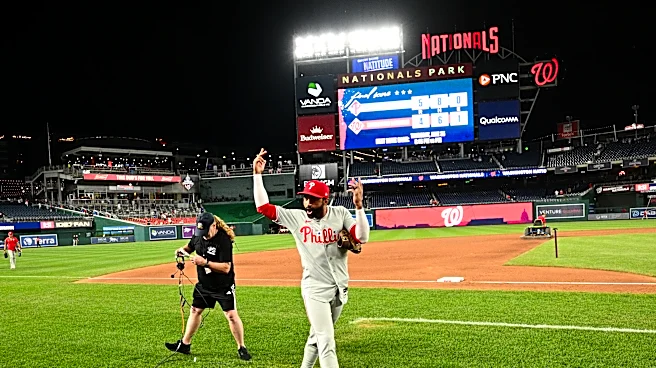
Kyle Schwarber, a key player for the Philadelphia Phillies, has set a new franchise record by hitting 30 home runs in just 84 games this season. This achievement makes him the fastest player in the history of the Phillies to reach this milestone. The
record was set during a game against the New York Mets, where Schwarber's performance continued to highlight his reputation as a prolific home run hitter. Despite the presence of other notable players in the league, Schwarber's consistent ability to hit home runs has kept him in the spotlight. His latest home run not only secured his place in the Phillies' record books but also marked him as the first player in Major League Baseball this season to reach 30 home runs.
Why It's Important?
Schwarber's achievement is significant for both the player and the Philadelphia Phillies. It underscores his value to the team and his exceptional talent as a home run hitter. For the Phillies, having a player who can consistently deliver such performances is crucial for their competitive edge in the league. This record also enhances Schwarber's standing in Major League Baseball, drawing attention to his capabilities amidst a field of other high-profile players. The milestone could boost team morale and fan engagement, potentially leading to increased attendance and viewership for Phillies games. Schwarber's performance may also influence team strategies and player development within the organization.
What's Next?
Following this record-setting performance, Kyle Schwarber and the Philadelphia Phillies will likely continue to focus on maintaining their competitive momentum in the league. Schwarber's ability to hit home runs consistently will be a key factor in the team's strategy as they aim for a successful season. The Phillies may also look to leverage this achievement in their marketing and fan engagement efforts, highlighting Schwarber's record as a testament to the team's talent and potential. Additionally, Schwarber's performance could attract attention from other teams, potentially influencing future contract negotiations or trade considerations.