





What's Happening?
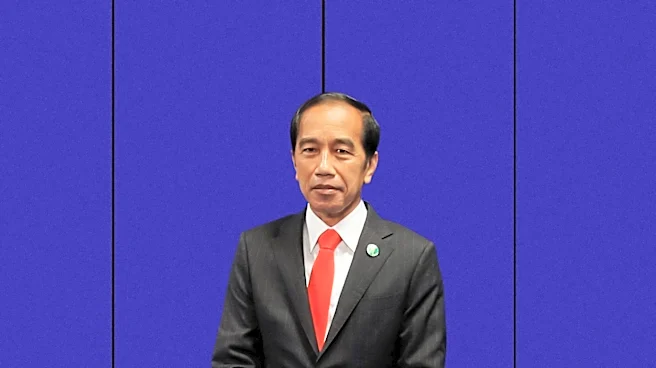
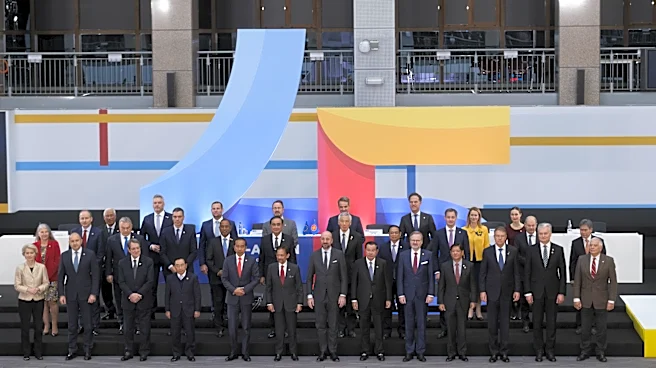
On November 21, the European Union and Indonesia officially signed their Comprehensive Economic Partnership Agreement (CEPA) and an Investment Protection Agreement. This signing follows the EU Council's authorization on November 18. The European Commission
indicates that the CEPA is designed to eliminate Indonesian import duties on 98.5% of tariff lines, which is projected to save EU exporters over €600 million annually in customs duties. Beyond tariff reductions, the agreement encompasses provisions for investment, services, intellectual property, and cooperation on raw-material supply chains. Maroš Šefčovič, the European Commissioner for Trade and Economic Security, has been a key figure in these negotiations. The agreement's full implementation is contingent upon further approvals from both the European Parliament and Indonesia's internal procedures, with provisional application anticipated in early 2027.
Why It's Important?
This agreement holds significant implications for various U.S. industries operating within or trading with the EU and Indonesia. While not directly involving the U.S., the CEPA could alter global trade dynamics and competitive landscapes. U.S. companies in sectors such as machinery, automotive, chemicals, pharmaceuticals, and agri-food that compete with EU exporters in the Indonesian market may face new competitive pressures due to the preferential access granted to EU businesses. Conversely, U.S. companies with operations in the EU that export to Indonesia could potentially benefit from the reduced tariffs. The agreement's focus on raw-material supply chains also signals a broader trend towards securing critical resources, which could influence global supply chain strategies and potentially impact U.S. access or pricing for certain materials. The CEPA's success could also set precedents for future trade agreements, influencing U.S. trade policy and negotiations with other nations.
What's Next?
The immediate next steps involve securing consent from the European Parliament and completing Indonesia’s internal ratification procedures. The European Commission anticipates that provisional application of the CEPA could begin as early as 2027, once these approvals are finalized. Businesses, particularly those in the machinery, automotive, chemicals, pharmaceuticals, and agri-food sectors, are advised to begin assessing the product-specific tariff schedules and rules of origin to prepare for when preferential treatment becomes available. Stakeholders will be closely monitoring the approval processes in both the EU and Indonesia, as well as any subsequent guidance on implementation. The agreement's impact on existing trade flows and investment patterns between the EU and Indonesia will become clearer as it moves towards full application, potentially prompting adjustments in global trade strategies for companies worldwide.
Beyond the Headlines
The EU-Indonesia CEPA signifies a broader strategic move by the EU to strengthen its economic ties in Southeast Asia, a region of growing global economic importance. This agreement could be seen as part of a larger effort by the EU to diversify its trade relationships and reduce reliance on traditional partners, especially in the context of evolving geopolitical landscapes. For the U.S., this development underscores the increasing competition for market access and influence in key emerging economies. The inclusion of provisions on intellectual property and raw-material supply chains highlights the evolving nature of trade agreements, moving beyond simple tariff reductions to encompass broader economic and strategic interests. This could prompt U.S. policymakers and businesses to re-evaluate their engagement strategies in the Indo-Pacific region to maintain competitiveness and secure access to vital markets and resources.