




What's Happening?
Joybuy has published a comprehensive 'Stepper Buying Guide' to assist consumers in selecting the appropriate stepper for home workouts. The guide addresses common pitfalls, such as instability, noise, and limited progression, that buyers often encounter
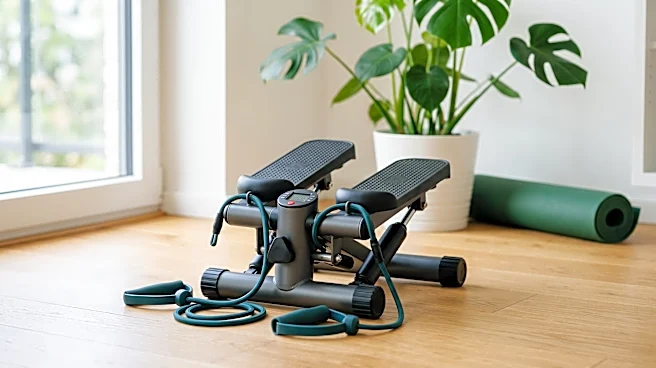
with low-quality models. It emphasizes critical technical criteria for making an informed purchase, including stability, maximum supported weight, mechanism type, versatility, foot surface, and dimensions. For aerobic steps, the guide recommends high-density polypropylene (PP) construction and non-slip pads for stability, while for mini steppers, a sturdy steel frame is advised. The importance of adjustable height for progression and the inclusion of resistance bands for a full-body workout are also highlighted. The guide provides specific product recommendations, such as the FITPADDY STEPPER01 Aerobic Stepper for versatility and the Merach Mini Stepper for compact design, detailing how these models avoid common issues and offer key advantages.
Why It's Important?
This buying guide is significant for the U.S. home fitness market, which has seen substantial growth as more individuals opt for at-home exercise solutions. By providing detailed criteria and recommendations, Joybuy helps consumers make educated decisions, reducing the likelihood of dissatisfaction and promoting safer workout practices. This initiative can foster greater trust in online retail platforms for fitness equipment and potentially drive sales of higher-quality products. For manufacturers, the guide sets a benchmark for product features and quality, encouraging innovation and adherence to safety standards. The emphasis on stability and proper mechanism types directly addresses user safety, which is a critical concern in the home fitness sector, potentially reducing injuries and improving overall user experience. This also impacts the broader retail landscape by influencing consumer expectations for product information and transparency.
What's Next?
As the home fitness market continues to expand, similar detailed buying guides and expert reviews are likely to become more prevalent across various product categories. Retailers and e-commerce platforms may invest further in providing comprehensive educational content to differentiate themselves and build consumer confidence. Manufacturers will likely respond by incorporating features highlighted in such guides, such as enhanced stability, quieter operation, and greater versatility, into their product designs. There may also be an increased focus on product certifications and safety standards to assure consumers of quality. The trend towards informed purchasing could lead to a more discerning consumer base, pushing the industry towards higher quality and more user-centric product development in the long term.
Beyond the Headlines
The proliferation of buying guides for home fitness equipment reflects a deeper trend of consumers seeking empowerment through information in an increasingly complex marketplace. In an era where online reviews can be unreliable, expert-curated guides offer a valuable resource for navigating product choices. This shift also underscores the growing importance of product longevity and sustainability, as consumers are encouraged to invest in durable equipment rather than frequently replacing low-quality items. Ethically, such guides promote responsible consumption by highlighting safety features and discouraging purchases that could lead to injury or quick obsolescence. Culturally, the emphasis on home workouts signifies a continued integration of fitness into daily life, moving beyond traditional gym settings and into personal spaces, making informed equipment choices even more crucial for a positive and sustainable fitness journey.