





What's Happening?
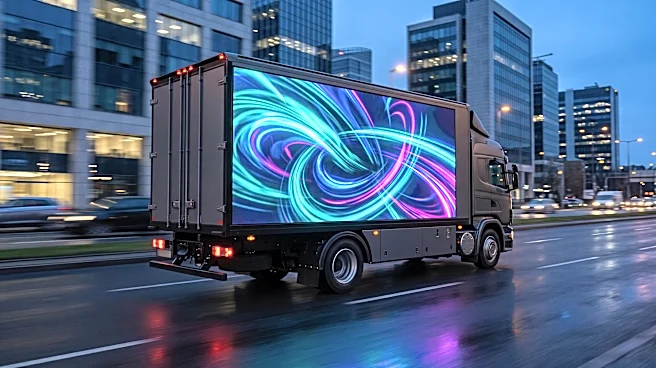
Businesses in Tampa are increasingly utilizing mobile LED advertising trucks to enhance their visibility and reach consumers in various locations. This form of advertising offers a dynamic alternative to traditional, stationary billboards by bringing
high-resolution digital displays directly to target audiences. The service provides flexible mobile advertising solutions, supported by professional services that manage screen quality, setup, scheduling, and campaign execution. Companies can rent these mobile billboard campaigns for different periods, with GPS and Wi-Fi tracking offering visibility and reporting on campaign operations. This allows businesses to understand precisely where their advertisements are being displayed. Mobile LED advertising is particularly effective for product/service promotions, grand opening events, community gatherings, concerts, sports events, corporate promotions, trade shows, and brand awareness campaigns, as it can adapt its route to target specific areas and events within the Tampa Bay region, including Downtown Tampa, Westshore, Ybor City, South Tampa, Brandon, Riverview, St. Petersburg, and Clearwater.
Why It's Important?
For U.S. businesses, particularly those in competitive urban markets like Tampa, mobile LED advertising trucks represent an innovative approach to cutting through advertising clutter. In an environment where consumers are constantly exposed to numerous messages, the mobility and visual impact of LED trucks offer a distinct advantage. This method allows businesses to engage with potential customers in real-time and in diverse settings, from busy city centers to specific event locations, maximizing exposure and relevance. The flexibility to adjust routes and target specific demographics or events makes it a highly efficient marketing tool, potentially leading to higher engagement and brand recall compared to static advertisements. The use of GPS and Wi-Fi tracking also provides valuable data for businesses, enabling them to measure campaign effectiveness and optimize future advertising efforts, which is crucial for strategic decision-making and resource allocation in the U.S. business landscape.
What's Next?
The trend of mobile LED advertising is likely to expand as businesses seek more dynamic and measurable ways to reach consumers. Companies offering these services will continue to refine their technologies, potentially incorporating more interactive elements or advanced data analytics to further enhance targeting and reporting capabilities. Businesses considering this advertising method will need to carefully plan their routes and schedules to align with their target audience's movements and local events. The success of these campaigns will depend on compelling visual content and strategic deployment. As this form of advertising gains traction, there may be increased discussions around local regulations concerning mobile billboards and digital displays, particularly regarding brightness, noise, and traffic safety. The industry will need to adapt to any evolving regulatory landscape while continuing to innovate in how it delivers mobile advertising solutions.
Beyond the Headlines
The rise of mobile LED advertising trucks reflects a broader shift in the advertising industry towards experiential and location-based marketing. This approach moves beyond passive consumption of ads, bringing the message directly into the consumer's environment. It highlights the increasing importance of 'out-of-home' (OOH) advertising in a digital age, demonstrating how physical presence can still be highly impactful. Ethically, the pervasive nature of mobile digital displays could raise questions about urban visual clutter and the constant bombardment of commercial messages in public spaces. Environmentally, the energy consumption of large LED screens and the emissions from the trucks themselves could become points of discussion. Culturally, these mobile billboards contribute to the evolving aesthetic of urban landscapes, transforming public spaces into dynamic advertising canvases. This method also underscores the ongoing challenge for businesses to capture and retain consumer attention in an increasingly saturated media environment.