



What's Happening?
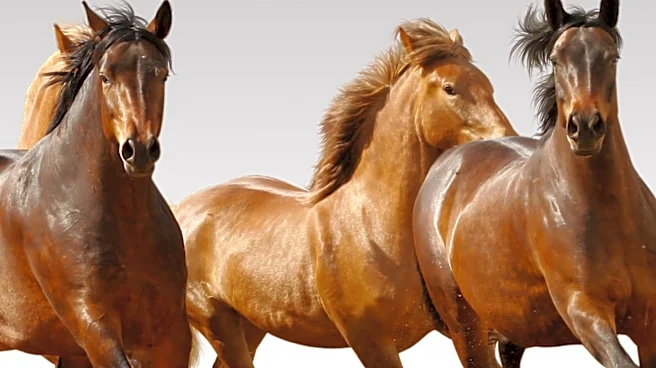
Martha Stewart shared insights into the emergency preparedness measures in place for her horses at her farm. She emphasized that responsible horse ownership extends beyond riding, encompassing comprehensive care throughout a horse's life. Her stable team
ensures a well-planned emergency program, focusing on the safety and readiness of her horses for unexpected situations. Recently, the emergency first-aid kit was checked, and the horses underwent trailer training. This training involved teaching each horse to calmly approach, load into, and stand comfortably inside a trailer, a process that requires patience, positive reinforcement, and trust. Stewart highlighted the importance of these preparations for the well-being of her animals.
Why It's Important?
This detailed account of emergency preparedness for horses underscores the significant responsibilities and investments involved in animal welfare, particularly for large animals. For horse owners and agricultural businesses, it highlights best practices in animal care and risk management, which can prevent injuries, ensure safety during natural disasters, and maintain the health of valuable livestock. The emphasis on training and regular checks of emergency equipment sets a standard for animal husbandry. This also has broader implications for the pet and animal care industry, promoting proactive measures and preparedness, which can reduce veterinary costs and emotional distress during crises. Furthermore, it raises awareness about the dedication required for responsible animal ownership, influencing public perception and potentially encouraging better care standards across the board.
What's Next?
The detailed approach to emergency preparedness for Martha Stewart's horses could inspire other horse owners and farm managers to review and enhance their own safety protocols. This might lead to increased demand for specialized animal emergency training, first-aid supplies, and secure transportation solutions. Veterinary professionals and animal welfare organizations may use such examples to promote comprehensive preparedness plans. Additionally, the focus on positive reinforcement in animal training could gain further traction, influencing methods used in various animal care settings. As climate change increases the frequency of extreme weather events, the importance of robust emergency plans for livestock will likely become an even more critical topic in agricultural and animal welfare discussions.
Beyond the Headlines
Martha Stewart's commitment to emergency preparedness for her horses reflects a deeper ethical consideration for animal welfare and the responsibilities that come with owning sentient beings. It highlights the bond between humans and animals, where trust and careful training are paramount. This narrative also subtly touches upon the broader theme of preparedness in general, suggesting that proactive planning is essential for mitigating risks in all aspects of life, not just for animals. In a society increasingly concerned with ethical treatment of animals, Stewart's example sets a high standard, demonstrating that luxury and meticulous care can coexist. It also underscores the often-unseen labor and expertise involved in maintaining a large estate and caring for its inhabitants, offering a glimpse into the complexities of responsible animal stewardship.