


What's Happening?
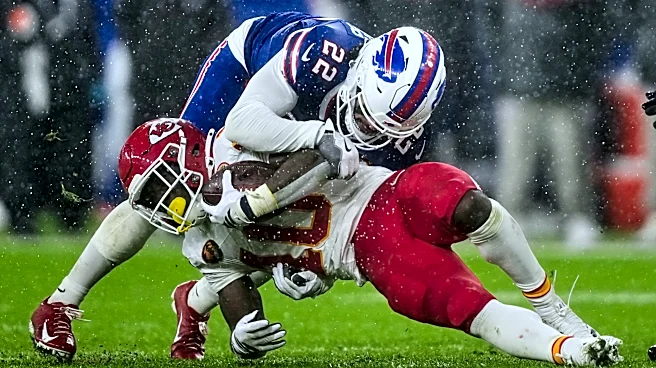
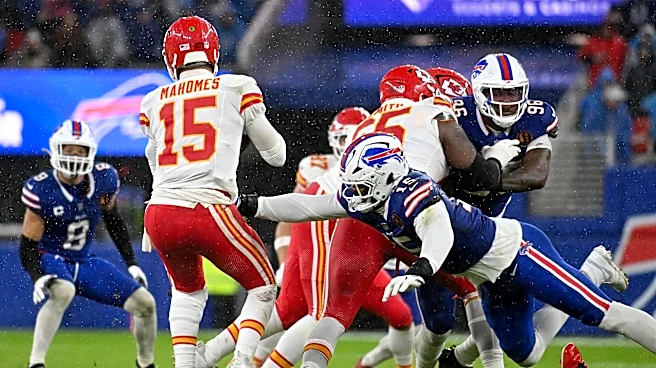
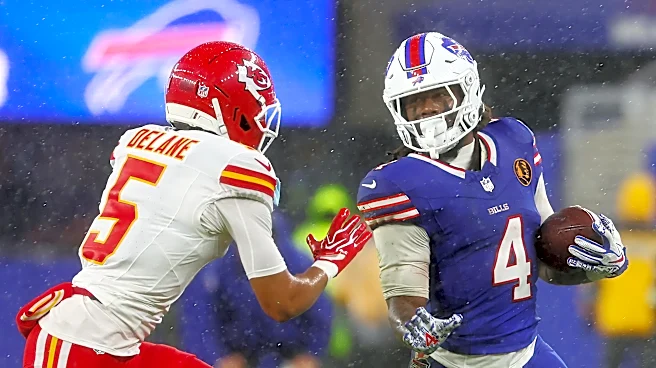
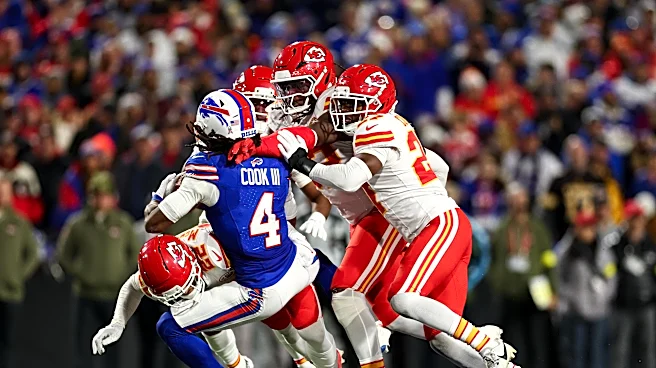
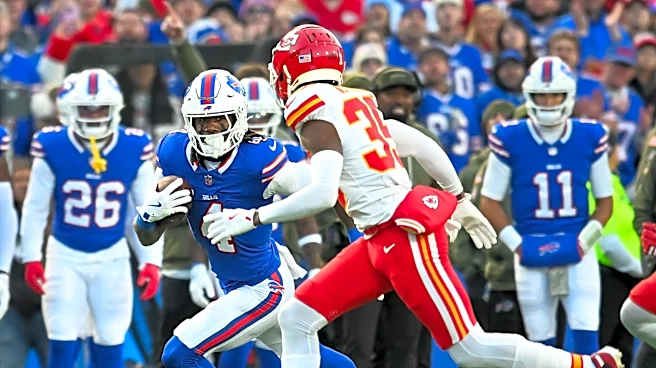
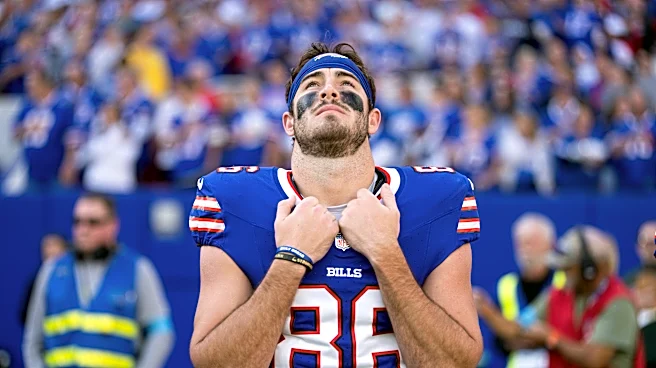
Recent NFL games have sparked significant debate among fans and observers regarding officiating decisions, particularly concerning catch reversals and roughing the passer penalties. A specific instance cited involves a controversial reversal in a Kansas
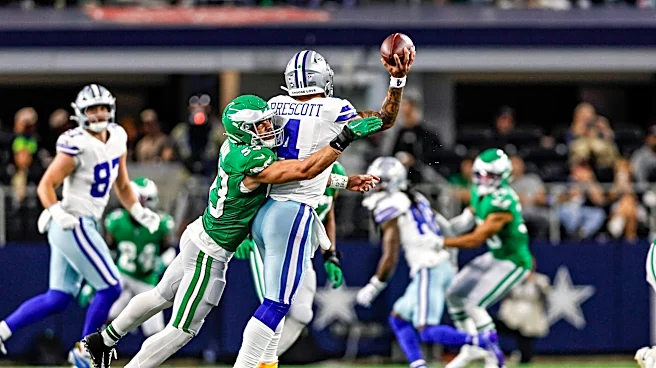
City Chiefs versus Buffalo Bills game, where a play initially ruled a catch was overturned, leading to widespread disbelief. Another point of contention is the interpretation of 'forcible contact' in roughing the passer calls, with critics arguing that incidental contact is being penalized despite rules stating otherwise. The 'loss of control' language for catches that graze the ground is also highlighted as being inconsistently applied, as seen in a Jaguars touchdown and a late-game Chiefs-Bills play. These incidents suggest a potential disconnect between the written rules and their application by officials and the replay center in New York.
Why It's Important?
Inconsistent and controversial officiating in the NFL carries significant implications for the league's integrity, fan engagement, and financial aspects. Unpredictable rule interpretations can directly influence game outcomes, potentially affecting team standings, playoff berths, and ultimately, the Super Bowl. For fans, these decisions can lead to frustration and a sense of unfairness, potentially eroding trust in the league's fairness and competitive balance. From a business perspective, controversial calls can impact betting markets, merchandise sales, and viewership, especially if the perception of biased or incompetent officiating becomes widespread. The financial stakes in the NFL are immense, and any factor that undermines the perceived legitimacy of competition can have ripple effects across its vast ecosystem, affecting everything from broadcast rights to team valuations.
What's Next?
The ongoing scrutiny of NFL officiating is likely to prompt further discussions and potential reviews within the league. While in-season changes to officiating protocols are rare, the accumulation of controversial calls could lead to a more rigorous examination of rule interpretations and replay center operations during the offseason. Stakeholders, including team owners, coaches, and the NFL Players Association, may pressure the league to address these inconsistencies to maintain competitive fairness. Public and media pressure will also continue to highlight these issues, potentially influencing future rule adjustments or training for officials. The league's response will be crucial in restoring confidence in its officiating standards and ensuring the integrity of the game.
Beyond the Headlines
Beyond the immediate impact on game results, the debate over NFL officiating touches upon broader themes of human error in high-stakes environments and the challenge of applying subjective rules in objective ways. The reliance on replay technology, while intended to enhance accuracy, sometimes introduces new layers of interpretation and controversy, as seen with the 'loss of control' rule. This situation highlights the inherent tension between the speed and physicality of live sports and the desire for perfect, instantaneous justice. It also raises questions about the psychological pressure on officials and the potential for 'over-officiating' in an attempt to avoid criticism, which can paradoxically lead to more contentious calls. The long-term implication could be a re-evaluation of how technology is integrated into officiating and the balance between human judgment and technological assistance.