








What's Happening?
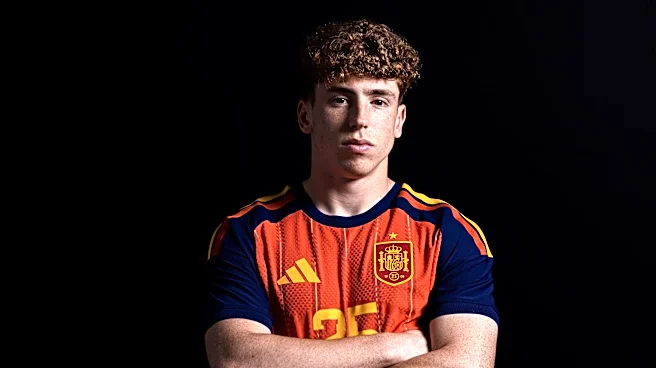
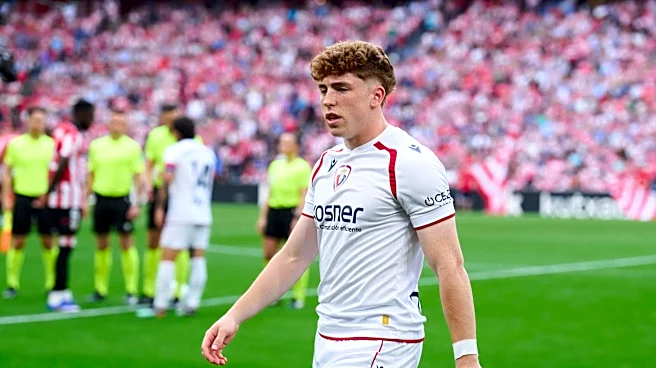
Liverpool has completed the signing of Spanish winger Victor Muñoz from Osasuna for a reported fee of £34.5 million. The 22-year-old, who is currently participating in the World Cup with Spain, underwent a medical examination in the United States and
is expected to sign a six-year contract with Liverpool. Muñoz, known for his versatility, can play on both wings and through the middle, adding pace and flexibility to Liverpool's attack. This acquisition marks the first signing under new Liverpool manager Andoni Iraola, who aims to fill the gap left by Mohamed Salah's departure. Muñoz's transfer was a strategic move by Liverpool, who outmaneuvered Newcastle, a club that had also shown interest in the player.
Why It's Important?
The signing of Victor Muñoz is significant for Liverpool as it addresses the need for a versatile and pacey winger, a priority for the club this summer. Muñoz's ability to play in multiple positions will provide Liverpool with more tactical options and enhance their ability to cope with injuries, a challenge they faced last season. This move also reflects Liverpool's strategic planning under new manager Andoni Iraola, who is familiar with Muñoz's capabilities from his knowledge of La Liga. The acquisition not only strengthens Liverpool's squad but also demonstrates their competitive edge in the transfer market, as they successfully secured Muñoz over Newcastle, who had been close to finalizing a deal.
What's Next?
With Muñoz's arrival, Liverpool is expected to continue strengthening their squad, particularly in the winger position. The club has shown interest in RB Leipzig's Yan Diomande, although securing his transfer may prove challenging due to high demand and Leipzig's efforts to retain him. Additionally, Muñoz's signing could impact the future of other players like Federico Chiesa, whose role at Liverpool remains uncertain. As the transfer window progresses, Liverpool's strategy will likely focus on building a robust and adaptable team capable of competing at the highest levels.