



What's Happening?
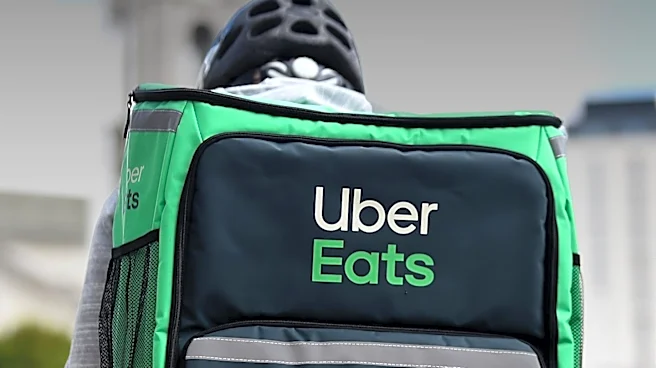
Uber Eats has initiated its first drone delivery program in Spring, Texas, a suburb of Houston, in collaboration with Zipline. This new service, announced on ABC’s 'Good Morning America,' allows customers in the Spring area to select 'drone' as a delivery option
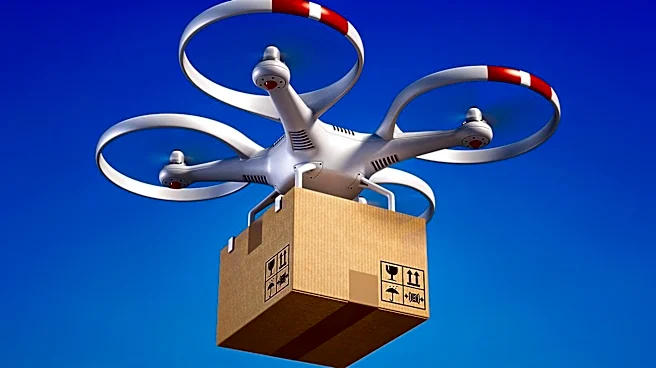
for their food orders. Zipline's drones are capable of traveling up to 70 mph, carrying up to eight pounds, and operating in various weather conditions, including rain. The delivery process involves a drone flying to the customer's location and lowering the food onto their front lawn using a tethered delivery pod from over 300 feet in the air. This launch is part of a broader plan by Uber Eats to expand drone delivery to Dallas, Texas, and other U.S. cities, with a long-term goal of achieving one million drone deliveries per day by the end of 2029. Zipline CEO Keller Cliffton stated that the aim is to provide delivery within 10 minutes across the country, leveraging Zipline's decade of experience in international logistics.
Why It's Important?
This drone delivery initiative marks a significant advancement in the logistics and food delivery industries, potentially transforming how consumers receive goods. For Uber Eats, it represents a strategic move to enhance delivery speed and efficiency, offering a competitive edge in the rapidly evolving on-demand market. The partnership with Zipline, a company with extensive experience in autonomous drone operations, brings proven technology to urban and suburban delivery networks. This could lead to reduced delivery times, improved customer satisfaction, and potentially lower operational costs in the long run by minimizing reliance on traditional vehicle-based delivery. The expansion of drone delivery could also alleviate traffic congestion and reduce carbon emissions associated with conventional delivery methods. Furthermore, it opens new avenues for employment in drone operation, maintenance, and logistics management, contributing to the growth of the autonomous delivery sector within the U.S. economy.
What's Next?
Following the pilot program in Spring, Texas, Uber Eats and Zipline plan to expand drone delivery services to Dallas, Texas, and subsequently to other major U.S. cities. The companies have set an ambitious target of reaching one million drone deliveries per day by the end of 2029, indicating a rapid scaling of operations. This expansion will likely involve further technological advancements in drone capabilities, regulatory approvals for broader airspace access, and the establishment of more localized drone hubs. Consumers in new service areas will gain access to faster delivery options, while restaurants and retailers may see increased order volumes due to enhanced delivery efficiency. The success of these initial deployments will be crucial in shaping public perception and regulatory frameworks for widespread drone delivery, potentially influencing investment and innovation in autonomous logistics across various sectors.
Beyond the Headlines
The introduction of drone delivery by Uber Eats and Zipline extends beyond mere convenience, touching upon broader societal and infrastructural implications. Ethically, the widespread use of delivery drones raises questions about privacy, noise pollution, and airspace management in residential areas. Legally, regulatory bodies like the FAA will need to continuously adapt and refine rules governing drone operations, ensuring safety and security as drone traffic increases. Culturally, this shift could normalize autonomous delivery as a standard service, altering consumer expectations for speed and accessibility. Long-term, the integration of drones into the delivery ecosystem could lead to a more resilient and efficient supply chain, particularly for time-sensitive goods. It also highlights a growing trend towards automation in service industries, potentially reshaping the future of work and urban planning as cities adapt to accommodate drone infrastructure and operations.