



What's Happening?
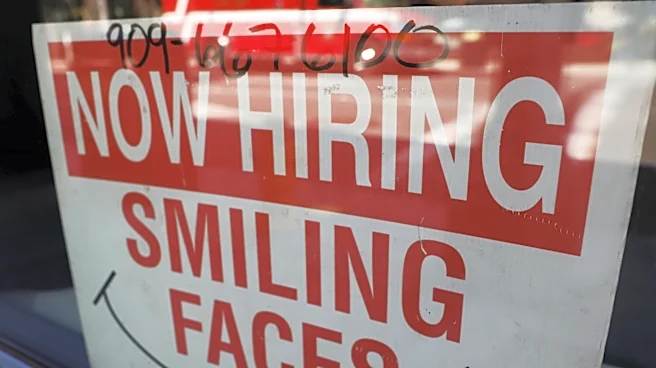
The U.S. economy is experiencing moderating wage growth and hiring momentum despite a relatively low unemployment rate, according to J.P. Morgan Asset Management. This divergence from the historical relationship between labor market tightness and wage pressures
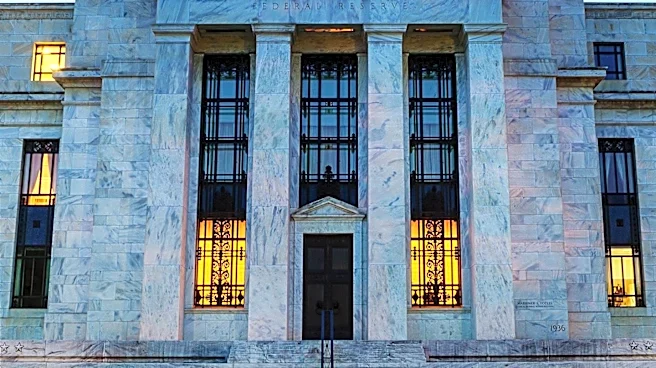
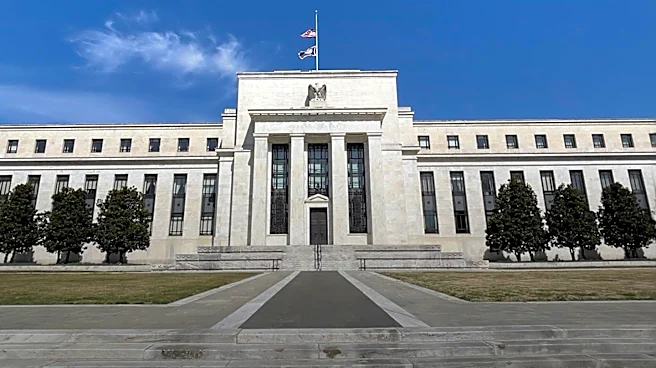
suggests that demand-side inflationary pressures are becoming more contained. However, persistent supply-side inflation, potentially fueled by elevated crude oil prices due to the Middle East conflict, continues to be a concern. Businesses are gradually passing on higher input costs to consumers, prolonging inflationary pressures. This complex economic landscape, characterized by sticky inflation, moderating wage growth, and uneven economic activity, is making the Federal Reserve's assessment of the inflation and growth outlook more challenging for 2027.
Why It's Important?
The interplay between moderating wage growth and persistent supply-side inflation has significant implications for U.S. households and businesses. Softer income growth could constrain household purchasing power, potentially delaying businesses' ability to fully pass on higher costs to consumers. This situation could lead to an extended pause in monetary policy throughout 2027, as central banks balance the need to control inflation with supporting economic activity. For investors, this uncertainty necessitates a diversified portfolio to navigate a broad range of potential outcomes, including further monetary tightening, recession-driven easing, or a 'goldilocks scenario' of moderating inflation and steady growth. The Federal Reserve's agile response to income data will be crucial in shaping the economic trajectory.
What's Next?
The outlook for 2027 remains uncertain, with an extended pause in Federal Reserve policy appearing increasingly likely if the current macro backdrop persists. However, renewed global disruptions, such as further geopolitical escalation or prolonged energy supply shocks, could shift this balance, potentially leading to a re-acceleration of inflation. Conversely, a severe supply-side shock undermining domestic demand could trigger a sharper economic deterioration, prompting central banks to consider renewed easing. A more favorable outcome could emerge if geopolitical tensions ease and energy prices retreat, leading to moderating inflation, steady economic growth, and a resumption of monetary easing. The Federal Reserve's projections currently indicate no rate changes in 2027, suggesting that markets may need to adjust to a less restrictive policy path than currently anticipated.
Beyond the Headlines
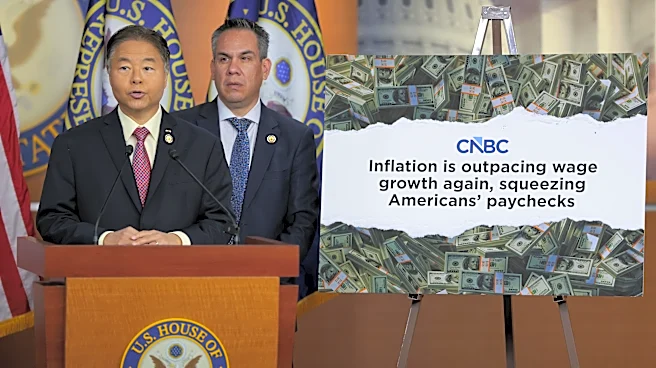
The current economic environment highlights a fundamental shift in inflationary dynamics, where supply-side factors play a more dominant role than traditional demand-side pressures. The decoupling of wage growth from a tight labor market challenges conventional economic models and could lead to a prolonged period of uneven economic recovery. This situation also raises questions about the effectiveness of monetary policy tools in addressing inflation driven by external shocks. The potential for a 'K-shape economy,' where some sectors thrive while others struggle, could exacerbate social and economic inequalities, leading to increased public discontent if real wage growth continues to lag behind inflation. The long-term implications for labor market structures and consumer spending patterns will be critical to observe.