






What's Happening?
Oscar-winning VFX supervisor Paul Lambert and co-supervisor Mag Sarnowska have elaborated on the complex visual effects and practical techniques employed in the film 'Project Hail Mary,' particularly concerning Ryan Gosling's zero-gravity scenes and the creation
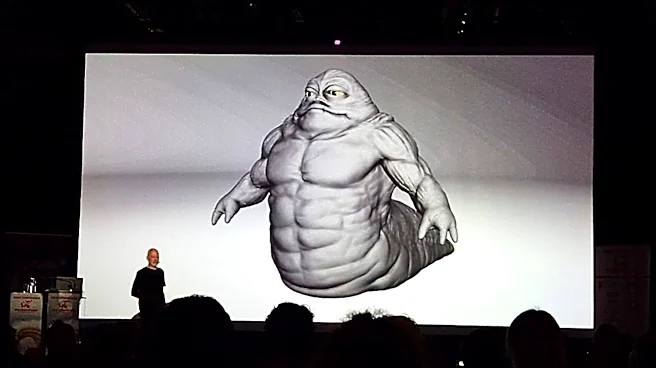
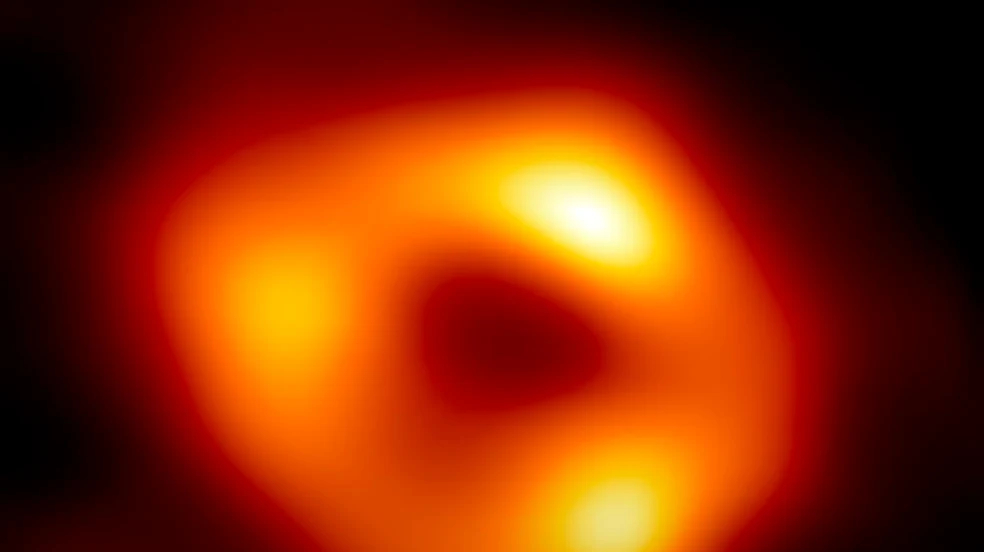
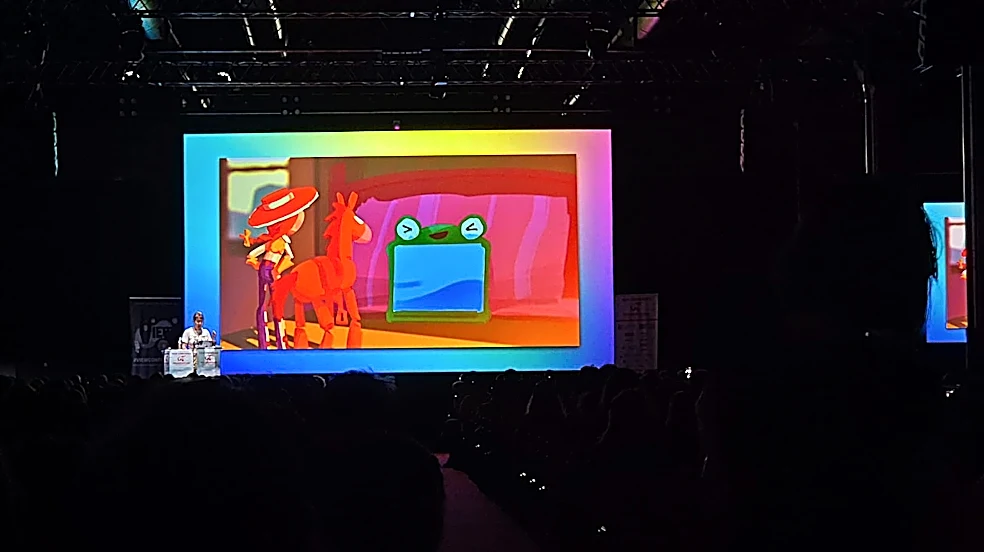
of the alien character, Rocky. During the View Conference in Turin, Lambert highlighted that creating convincing zero-gravity environments was a significant challenge. Due to the elaborate spacecraft sets, using a 'vomit comet' for genuine weightlessness was not feasible. Instead, Gosling performed on wire rigs, including a rotating harness, with VFX artists meticulously adjusting his limbs and adding drifting objects to enhance the illusion of floating. The team also utilized astronomical data from the European Space Agency’s Gaia mission and NASA footage to ensure scientific accuracy in depicting space, opting for realistic skies over colorful nebulae. For the character Rocky, half of the shots were achieved through practical puppetry by James Ortiz and a team, while the other half were full computer-generated (CG) effects. Sarnowska noted that the VFX team often struggled to differentiate between the puppet and CG versions of Rocky during internal reviews, underscoring the seamless integration of practical and digital effects.
Why It's Important?
The detailed explanation of the visual effects in 'Project Hail Mary' underscores a significant trend in modern filmmaking: the sophisticated integration of practical effects with advanced CGI to achieve heightened realism and immersive storytelling. This approach is crucial for science fiction films, where the believability of fantastical elements directly impacts audience engagement. The commitment to scientific accuracy, such as using real astronomical data for sky depictions, sets a new standard for authenticity in the genre, moving beyond purely imaginative visuals. The seamless blend of puppetry and CG for characters like Rocky demonstrates how traditional filmmaking techniques can still play a vital role alongside cutting-edge technology, often resulting in more tangible and believable character interactions. This methodology not only pushes the boundaries of visual storytelling but also influences the skill sets required in the film industry, emphasizing the need for VFX artists who can work collaboratively across diverse technical and artistic disciplines. The success of these techniques in 'Project Hail Mary' could encourage other productions to invest more in hybrid approaches, potentially leading to a new era of visually stunning and scientifically grounded cinematic experiences.
What's Next?
The insights shared by the VFX supervisors suggest a continued evolution in how filmmakers approach complex visual challenges, particularly in the science fiction genre. Future productions are likely to further explore and refine the hybrid approach of combining practical effects with advanced CGI, drawing lessons from the successes and challenges encountered in 'Project Hail Mary.' This could lead to increased investment in specialized wire rig technologies and motion capture systems that allow actors to perform in ways that closely mimic zero-gravity or other fantastical conditions, reducing the need for extensive post-production adjustments. Furthermore, the emphasis on scientific accuracy in depicting space environments may become a more prevalent expectation, pushing VFX teams to collaborate more closely with scientific institutions and astronomers. The seamless integration of practical puppetry and CG, as demonstrated with Rocky, could also inspire a resurgence in practical creature effects, with digital enhancements used to perfect rather than entirely replace physical creations. This trend could foster a new generation of filmmakers and VFX artists who are adept at leveraging both traditional and digital tools to create compelling and believable cinematic worlds.
Beyond the Headlines
The meticulous work behind 'Project Hail Mary' extends beyond mere technical achievement, touching upon the philosophical aspects of cinematic realism and the audience's suspension of disbelief. By striving for scientific accuracy in space depictions and seamlessly blending practical and digital effects, the film challenges the notion that CGI is solely about creating the impossible. Instead, it highlights its power to enhance and ground the improbable in a believable reality. This approach fosters a deeper connection with the narrative, as viewers are less likely to be distracted by visual inconsistencies. The use of puppetry for Rocky also raises questions about the emotional resonance of characters; a physical presence, even if digitally enhanced, can often convey a different kind of authenticity than a purely digital creation. This blend suggests a future where the 'magic' of cinema lies not just in what can be imagined, but in how convincingly it can be presented, blurring the lines between the tangible and the virtual. It also underscores the collaborative nature of filmmaking, where scientific consultants, puppeteers, and VFX artists work in concert to create a cohesive and immersive experience, ultimately enriching the art form itself.