







What's Happening?
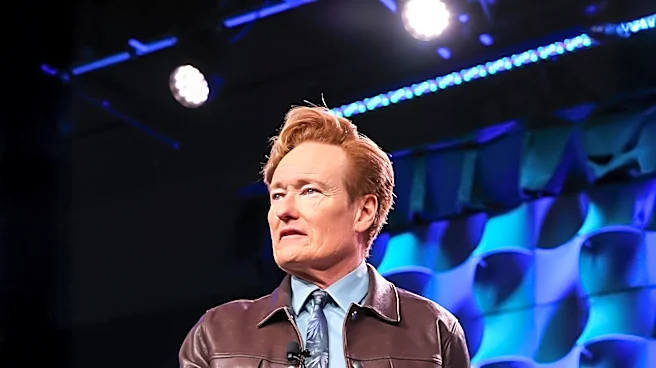
Conan O'Brien, the renowned comedian and former late-night host, recently revealed on his podcast, 'Conan O’Brien Needs a Friend,' that joining 'The Simpsons' in 1991 was a life-saving career move. O'Brien confessed to being in a 'bad place' personally
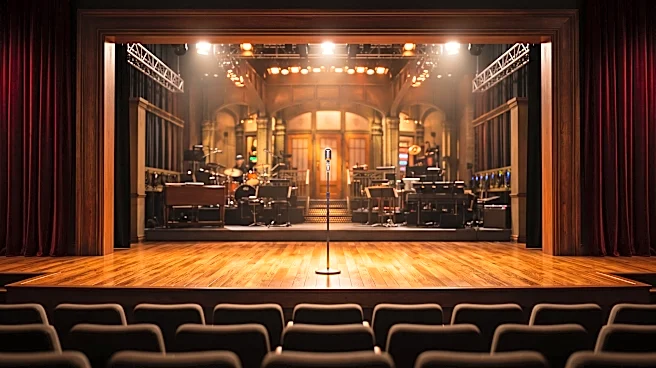
and professionally after leaving 'Saturday Night Live' (SNL) in 1991, where he had worked as a writer since 1988. Despite loving his job and colleagues at SNL, he felt a strong need to depart. With no immediate job prospects, he was approached by 'The Simpsons' writers Mike Reiss and Al Jean, who had heard of his availability. O'Brien quickly secured a position as a writer and producer for the animated series, a role he held until 1993. He described this transition as a 'magical experience' that fundamentally transformed his life and career trajectory. During his tenure, he notably penned the acclaimed episode 'Marge vs. the Monorail.'
Why It's Important?
This revelation highlights the often-unseen personal struggles faced by public figures, even at the height of their careers. O'Brien's candidness about his mental state after SNL underscores the pressures within the entertainment industry and the potential for burnout. His subsequent success on 'The Simpsons' and later as a late-night talk show host demonstrates the critical impact of career opportunities and supportive environments on an individual's well-being and professional development. For aspiring writers and comedians, O'Brien's story serves as a testament to resilience and the unexpected paths that can lead to significant career breakthroughs. It also reinforces the idea that even established professionals can experience periods of uncertainty and require a pivotal change to regain their footing, ultimately shaping their legacy in profound ways.
What's Next?
While O'Brien's time on 'The Simpsons' concluded in 1993, leading to his long and successful career in late-night television, his recent podcast discussion with 'The Simpsons' creator Matt Groening serves as a reflective moment rather than an announcement of future plans related to the show. O'Brien has since transitioned from traditional late-night hosting to focus on his podcast and other projects, including 'Conan O'Brien Must Go.' This conversation provides fans and industry observers with deeper insight into the formative years of a prominent comedic voice. It is likely to spark further discussions among fans of both O'Brien and 'The Simpsons' about the show's historical impact and O'Brien's contributions, potentially leading to renewed interest in his early writing work on the series.
Beyond the Headlines
O'Brien's account delves into the psychological toll that high-pressure creative environments like 'Saturday Night Live' can exact, even on successful individuals. His decision to leave SNL without a safety net, driven by a sense of being 'in a bad place,' speaks to the importance of prioritizing mental health and well-being over perceived career stability. The swift and serendipitous offer from 'The Simpsons' not only provided a professional lifeline but also a creative sanctuary where he could hone his craft in a different format. This narrative underscores the interconnectedness of personal well-being and professional output, suggesting that a supportive and creatively stimulating environment can be crucial for overcoming personal challenges and fostering long-term success in demanding fields. It also highlights the often-underestimated role of mentorship and networking, as the intervention of Reiss and Jean proved pivotal.