






What's Happening?
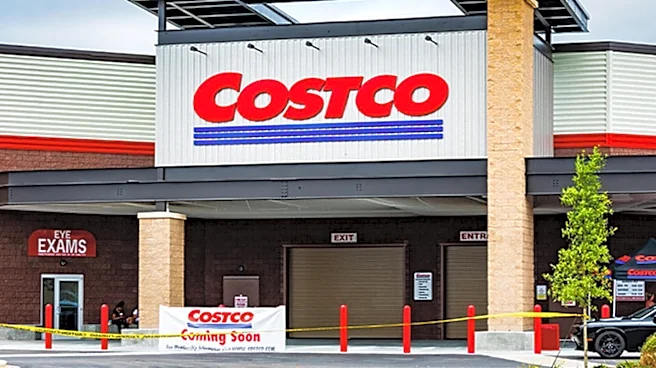
Costco Wholesale collected $184 million in tariff refunds during its fiscal fourth quarter and has largely reinvested this windfall into reducing prices for its members across various product categories, including produce, meat, beverages, home furnishings,
and hardware. CEO Ron Vachris stated that this reinvestment aims to 'give value back to our members.' This strategy has been well-received by investors, with Costco's shares closing at $1,012, up 1.6% on the day and 19% for the year. The company's fiscal fourth-quarter results were strong, with net sales rising 11.2% to $93.9 billion and earnings per share (EPS) of $6.75, which beat estimates and included a $0.15 one-time benefit from the tariff refunds. Digitally enabled comparable sales also saw a significant jump of 19.5%. Walmart has indicated it will adopt a similar strategy with its own tariff refunds, intensifying the competition on pricing.
Why It's Important?
Costco's decision to reinvest tariff refunds directly into lower prices for its members underscores its commitment to its value-driven business model, which is crucial for retaining and attracting its membership base. This approach not only strengthens customer loyalty but also provides a competitive edge in the U.S. retail market, especially against rivals like Walmart who are also leveraging tariff refunds for price reductions. For consumers, this means continued access to competitive pricing on essential goods, which is particularly impactful during periods of inflation. For investors, the positive stock performance reflects confidence in Costco's strategy of prioritizing member value, even if it means a temporary impact on gross margins. This move also highlights the broader economic impact of tariff policies and how their adjustments can directly influence consumer prices and corporate strategies in the retail sector.
What's Next?
Costco plans to continue reinvesting most of its expected tariff refunds, with the fourth-quarter haul representing only about a third of the total anticipated amount. This suggests that members can expect ongoing price benefits in the near future. The company will also focus on expanding its physical footprint, with plans to open 33 new warehouses in fiscal year 2027, adding to its existing 939 locations. Investors will be closely watching the November 4 October sales report and the December 10 Q1 results to assess whether comparable sales growth remains in double digits. The impact of four class-action lawsuits filed in March, seeking to claim the tariff refunds Costco receives, will also be a factor to monitor, as these could potentially affect the company's ability to fully utilize these funds for member benefits.
Beyond the Headlines
Costco's strategy of passing tariff refunds directly to consumers through lower prices reflects a broader corporate philosophy that prioritizes long-term customer relationships over short-term profit maximization. This approach can foster significant brand loyalty and create a resilient business model, even in a highly competitive market. The ongoing 'value fight' between major retailers like Costco and Walmart, fueled by tariff refunds, could lead to a sustained period of competitive pricing, benefiting consumers but potentially squeezing margins for other retailers. This situation also raises questions about the role of tariffs in the U.S. economy and how their imposition and subsequent refunds can ripple through supply chains and consumer markets. The legal challenges regarding the ownership of these refunds could also set precedents for how such windfalls are handled by corporations in the future, impacting both shareholder returns and consumer benefits.