




What's Happening?
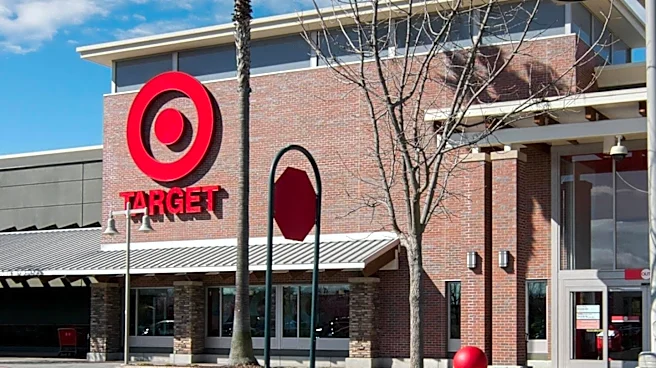
Target Corporation, a Fortune 50 company and leading U.S. retailer, is highlighting its comprehensive employee benefits and its identity as a technology-driven organization in recent job postings. The company offers competitive pay, with salary ranges
for positions like Lead Security Engineer and Director, Marketing Transformation, varying based on factors such as labor markets, education, experience, and certifications. Benefits for eligible team members include comprehensive health benefits (medical, vision, dental, life insurance), 401(k) plans, employee discounts, paid sick leave, national holidays, and paid vacation. Target also provides education assistance through its 'Dream to Be' program, offering tuition-free programs. The company emphasizes its behind-the-scenes tech operations, stating it fuels innovation and provides a strong technology framework for its retail business, supporting both online and in-store experiences.
Why It's Important?
Target's focus on robust employee benefits and its self-identification as a tech company is significant for the U.S. labor market and the retail industry. In a competitive job market, offering extensive benefits like education assistance and comprehensive health coverage can attract and retain talent, particularly in specialized fields such as technology and engineering. This approach helps Target secure skilled professionals necessary to maintain its cutting-edge operations and digital infrastructure. For the retail sector, this highlights a growing trend where technology is no longer just a support function but a core component of business strategy, driving efficiency, customer experience, and innovation. This shift can influence other retailers to invest more in their tech capabilities and employee welfare, potentially raising industry standards for compensation and benefits.
What's Next?
Target is likely to continue leveraging its comprehensive benefits package and tech-forward image to attract top talent across various roles, from security engineers to logistics managers. The company's commitment to education assistance and competitive pay suggests an ongoing investment in its workforce development and employee satisfaction. This strategy will be crucial as Target aims to maintain its position as a leading retailer and innovator. Future initiatives may include further enhancements to its tech infrastructure, expansion of its educational programs, and continued adaptation of work arrangements, such as the Hybrid/Flex for Your Day model, to meet evolving employee needs and business demands. The emphasis on technology will also drive continuous improvement in its supply chain, customer experience, and overall operational efficiency.
Beyond the Headlines
Target's dual identity as a retailer and a tech company reflects a broader transformation in the American economy, where traditional industries are increasingly reliant on advanced technology and skilled tech professionals. This convergence blurs the lines between sectors, creating new career paths and demanding a workforce with diverse skill sets. The provision of extensive benefits, particularly education assistance, also points to a growing recognition among major corporations of the importance of lifelong learning and employee well-being. This could set a precedent for corporate responsibility, encouraging other companies to invest in their employees' long-term growth and financial security. The integration of technology into every facet of Target's operations, from threat management to supply chain logistics, underscores the critical role of cybersecurity and data engineering in protecting and optimizing modern business enterprises.