








What's Happening?
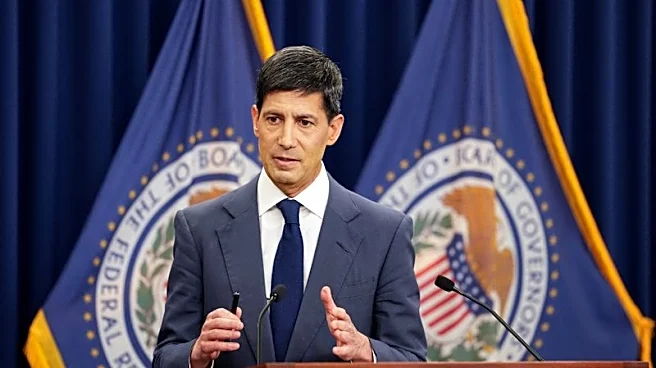
The yield on the 2-year Treasury note decreased as Minneapolis Federal Reserve President Neel Kashkari indicated a potential interest rate hike by the end of the year. Kashkari, a voting member of the Federal Open Market Committee, has revised his outlook,
suggesting that one rate increase may be necessary. This development comes as energy prices decline, reducing the anticipated impact of higher oil and gasoline prices on the economy. The 2-year Treasury note yield, which is sensitive to short-term Federal Reserve interest rate decisions, fell by more than 3 basis points to 4.086%. Meanwhile, the 10-year Treasury yield, a benchmark for mortgages and other loans, decreased by 2 basis points to 4.372%. The 30-year Treasury yield, which often reacts to geopolitical events, saw a slight increase of less than 1 basis point to 4.865%. These movements in Treasury yields reflect ongoing market adjustments to inflation data and geopolitical tensions.
Why It's Important?
The potential interest rate hike signaled by Kashkari is significant as it reflects the Federal Reserve's ongoing efforts to manage inflation and stabilize the economy. A rate increase could impact borrowing costs for consumers and businesses, influencing spending and investment decisions. The decline in Treasury yields, particularly the 2-year note, suggests that investors are adjusting their expectations for future Federal Reserve actions. Lower yields can lead to reduced borrowing costs, which may support economic activity. However, the prospect of a rate hike indicates that the Federal Reserve remains vigilant about inflationary pressures, which could affect economic growth and financial markets. Stakeholders, including investors, businesses, and policymakers, will closely monitor these developments as they navigate the complex economic landscape.
What's Next?
As the Federal Reserve considers a potential rate hike, market participants will be attentive to upcoming economic data releases and Federal Reserve communications. The trajectory of inflation and economic growth will be critical factors in determining the timing and magnitude of any rate adjustments. Additionally, geopolitical developments, particularly in the Middle East, could influence energy prices and, consequently, inflation expectations. Businesses and consumers may need to prepare for potential changes in borrowing costs, which could affect financial planning and investment strategies. The Federal Reserve's decisions will likely have far-reaching implications for the U.S. economy and global financial markets.