
What's Happening?
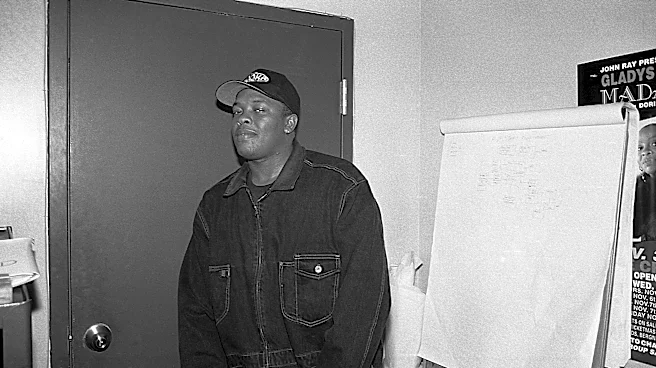
Dr. Dre's sophomore solo album, '2001,' released through Aftermath Entertainment and Interscope Records, is celebrating its 27th anniversary. The album, which debuted on November 16, 1999, marked a significant
return for Dr. Dre to the forefront of West Coast Hip-Hop, seven years after his debut, 'The Chronic.' Originally promoted as 'Chronic 2001,' its release followed a period of mixed commercial results for Aftermath Entertainment, but the success of Eminem’s 'The Slim Shady LP' earlier in 1999 helped build momentum. The 23-track project featured a blend of established artists like Snoop Dogg and Kurupt, and newer talents such as Eminem and Hittman. Notable tracks include 'Still D.R.E.' featuring Snoop Dogg, 'Forgot About Dre' featuring Eminem (which earned a Grammy Award), and 'The Next Episode' featuring Snoop Dogg and Nate Dogg. The album's production, primarily handled by Dr. Dre and Mel-Man, introduced a polished, cinematic sound characterized by signature piano melodies, booming basslines, crisp drums, and G-funk influences, which became a blueprint for future producers.
Why It's Important?
The album '2001' holds significant importance in the landscape of U.S. music and culture, particularly within the hip-hop genre. Commercially, it debuted at No. 2 on the Billboard 200, selling approximately 516,000 copies in its first week, and eventually achieved 7-times platinum certification from the RIAA. Beyond sales, its impact is profound due to its innovative production style, which pushed the boundaries of West Coast hip-hop and influenced generations of beatmakers. The album successfully bridged different eras of hip-hop by integrating both veteran and emerging artists, showcasing Dr. Dre's ability to evolve the genre's sound. Its iconic tracks remain staples in hip-hop culture, demonstrating the album's enduring appeal and its role in defining the sound of the late 1990s and early 2000s. This project solidified Dr. Dre's reputation not just as a rapper, but as one of the most influential producers in music history, further expanding his influence into artist development and business ventures like Beats Electronics.
What's Next?
While '2001' was Dr. Dre's final solo studio project for nearly 16 years until 'Compton' in 2015, its legacy continues to influence contemporary music. The album's enduring popularity means its tracks will likely continue to be celebrated in classic hip-hop rotations and sampled by new artists. Dr. Dre's continued involvement in music production, artist development, and business ventures, such as his work with 50 Cent and Kendrick Lamar, suggests that his influence, rooted in projects like '2001,' will persist. The album's anniversary serves as a reminder of its cultural significance and its role in shaping the trajectory of hip-hop, ensuring its continued study by aspiring producers and appreciation by fans. Future retrospectives and documentaries on hip-hop history will undoubtedly continue to highlight '2001' as a pivotal work.
Beyond the Headlines
The impact of '2001' extends beyond its musical achievements, touching upon the cultural and economic dimensions of hip-hop. The album's success demonstrated the commercial viability of West Coast hip-hop on a global scale, contributing to the genre's mainstream acceptance and economic growth. Ethically, Dr. Dre's ability to bring together diverse artists and create a cohesive, groundbreaking project highlights the collaborative spirit often found within hip-hop, fostering a sense of community and shared artistic vision. The album also represents a significant moment in the evolution of music production, showcasing how technological advancements and creative vision can redefine a genre's sound. Its influence on subsequent artists and producers underscores the cyclical nature of artistic inspiration and the continuous evolution of musical styles, making '2001' a cultural touchstone that continues to resonate.