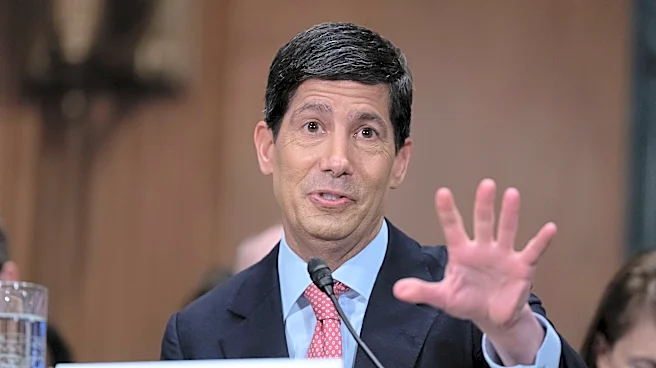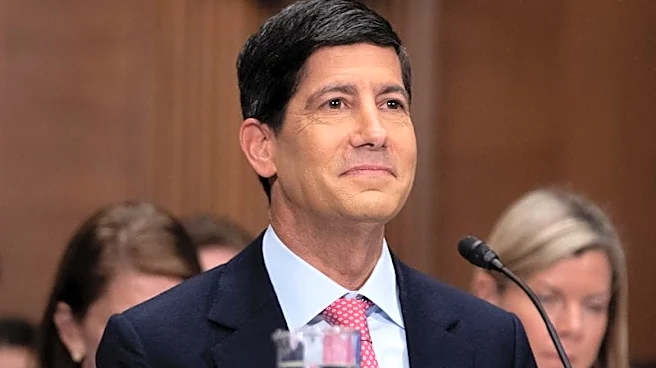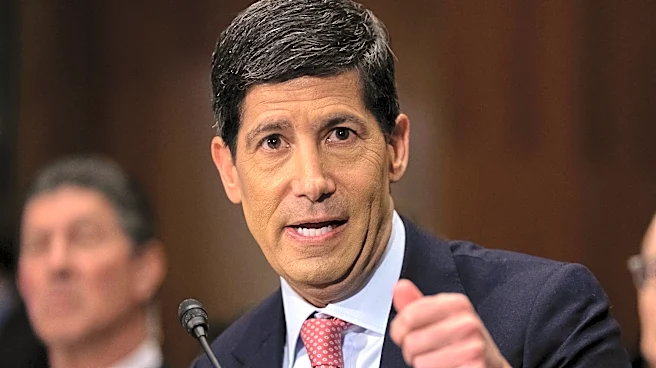




What's Happening?
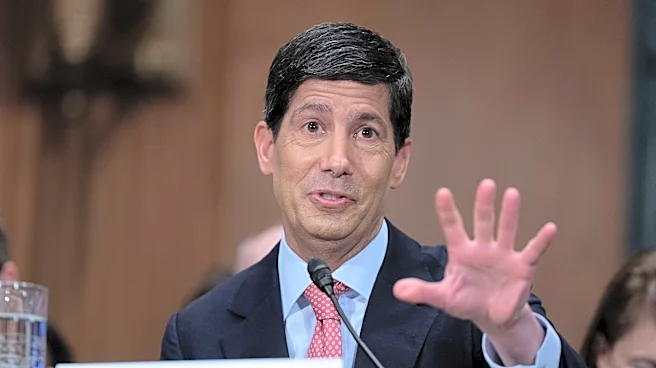
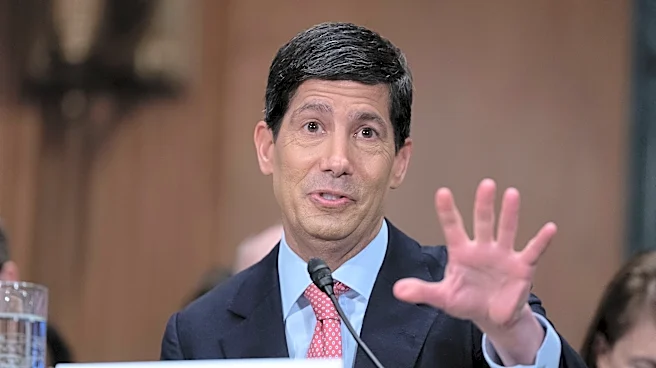
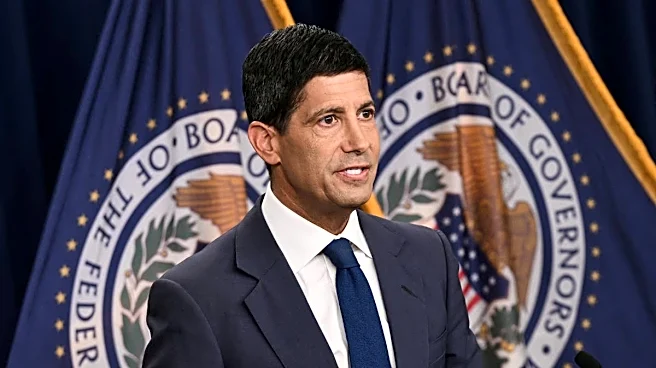
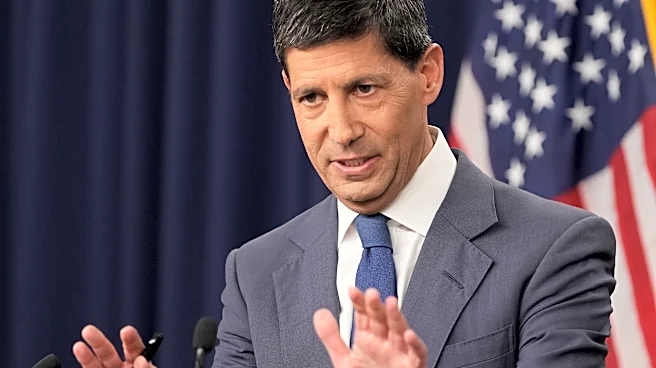
The Federal Reserve has decided to keep its key interest rate steady, despite opposition from three officials who advocated for a rate hike to address inflation concerns. The decision was made with a 9-3 vote, marking the first time since 2016 that three policymakers
dissented with a unified view. Fed Chair Kevin Warsh has emphasized the importance of focusing on economic conditions rather than providing forward guidance. The decision reflects ongoing debates within the Fed about the best approach to managing inflation, which has remained above the Fed's 2% target for over five years.
Why It's Important?
The Fed's decision to hold interest rates steady highlights the internal divisions within the central bank regarding monetary policy. The dissenting votes indicate a growing concern about inflation and its impact on the economy. This decision is crucial for businesses and consumers, as interest rates influence borrowing costs, investment decisions, and overall economic activity. The Fed's approach also affects market expectations and investor confidence, as it signals a cautious stance in the face of economic uncertainties, including geopolitical tensions and fluctuating energy prices.
What's Next?
The Federal Reserve's future actions will depend on economic data and developments in the coming months. The Fed will continue to monitor inflation and employment indicators to assess the need for potential rate adjustments. The internal dissent suggests that future meetings may involve more debates and discussions about the appropriate monetary policy path. Additionally, the Fed's communication strategy will be crucial in managing market expectations and providing clarity on its policy intentions.