





What's Happening?
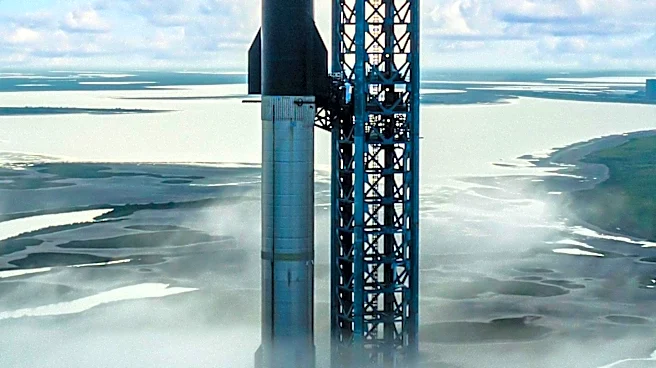
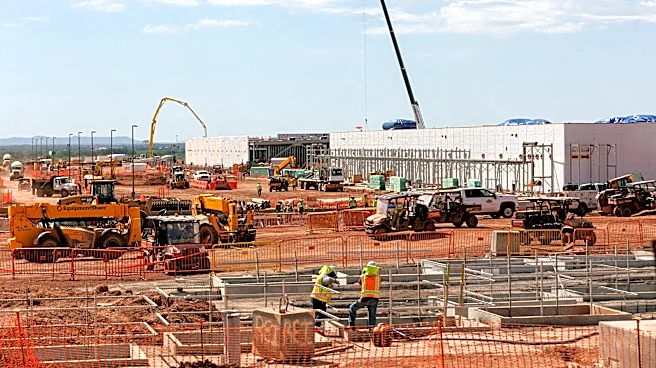
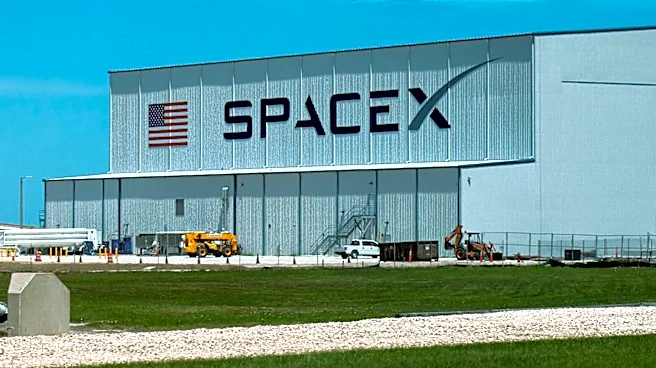
SpaceX is planning a substantial $24 billion investment to construct a natural-gas plant and supercomputing facility at Starbase City, Texas. This development, one of the largest private investments in the Rio Grande Valley, will span 444 acres east of Brownsville,
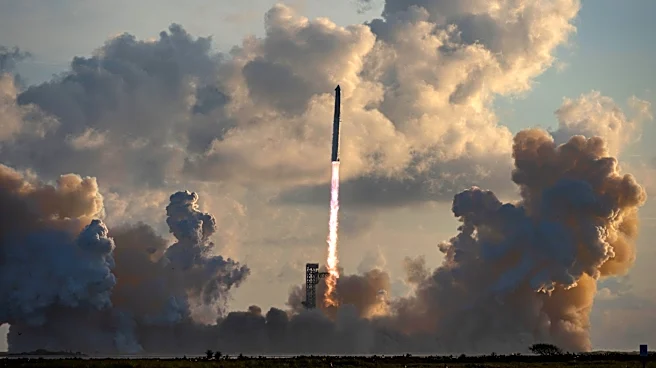
between Boca Chica Boulevard and the Port of Brownsville in Cameron County. SpaceX intends to construct, own, and operate these facilities. As part of this initiative, an affiliate, Lone Star Mineral Development, has filed for the Starpipe project, an 8-mile gas pipeline slated for completion by January 2027. This pipeline will supply the plant, which will convert natural gas into liquid methane for Starship rockets. The Starbase City Commission is scheduled to review a property tax abatement and economic development agreement for the project on December 9.
Why It's Important?
This ambitious project by SpaceX signifies a major strategic move to integrate its energy and computing needs directly into its operations, potentially setting a new model for large-load developers. By owning its generation capabilities, SpaceX aims to circumvent multi-year waits for ERCOT grid interconnection, a critical advantage given the current audit on large-load interconnections. This integrated approach, encompassing silicon, power, and compute under a single owner, could provide significant operational efficiencies and cost controls for SpaceX's AI and aerospace endeavors. The development also represents a substantial economic boost for the Rio Grande Valley, attracting significant investment and potentially creating numerous jobs. The success of this integrated model will be closely watched by other industries facing similar energy and computing demands.
What's Next?
The immediate next step for SpaceX's project is the Starbase City Commission's consideration of a property tax abatement and economic development agreement on December 9. The outcome of this review will be crucial in determining the financial incentives and local support for the development. Concurrently, Lone Star Mineral Development will proceed with the Starpipe project, aiming for its completion by January 2027 to ensure a steady supply of natural gas to the plant. The construction and operational phases of the natural-gas plant and supercomputing facility will follow, with other large-load developers closely observing the effectiveness of SpaceX's integrated fuel supply, generation, and compute model. The project's progress will also be subject to ongoing regulatory approvals and environmental considerations.
Beyond the Headlines
SpaceX's decision to build its own natural-gas plant and supercomputing facility highlights a growing trend among major tech and industrial players to achieve greater self-sufficiency in energy and data infrastructure. This vertical integration strategy could reduce reliance on external utilities and enhance operational resilience, particularly for energy-intensive operations like rocket fuel production and advanced AI computing. Furthermore, the project underscores the increasing convergence of aerospace, energy, and artificial intelligence sectors, potentially driving innovation in sustainable fuel production and high-performance computing. The development also raises questions about the long-term environmental impact of such large-scale industrial facilities, even as they aim to support advanced technological endeavors, and how local communities will balance economic growth with environmental stewardship.