




What's Happening?
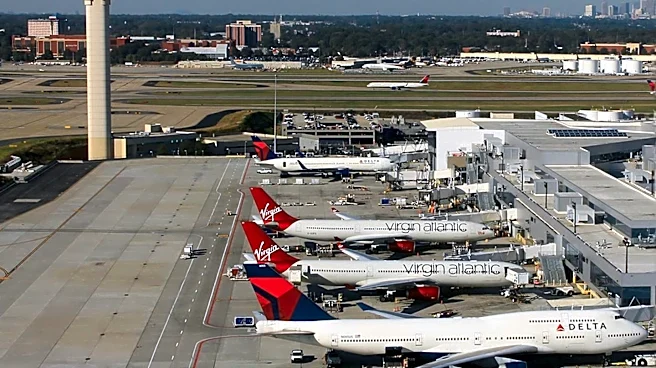
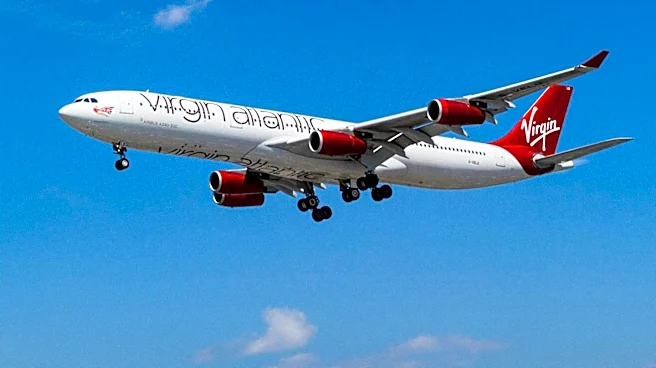
Delta Air Lines and Virgin Atlantic are actively pushing back against Heathrow Airport's decision to separate their co-located operations. Heathrow announced plans to move Delta from Terminal 3 to Terminal 4, while Virgin Atlantic would remain in Terminal 3.
This separation, expected to take effect in 2028, would end a more than decade-long partnership where both airlines operated from adjacent terminals, facilitating seamless connections for passengers. Delta CEO Ed Bastian stated on November 2 that the decision was "short-sighted, deeply disappointing and bad for airline customers." Virgin Group founder Richard Branson and Virgin Atlantic CEO Corneel Koster have also voiced strong opposition, arguing that the move would complicate things for staff and passengers, weaken competition, and reduce choice for travelers.
Why It's Important?
The proposed terminal changes at Heathrow Airport carry significant implications for the transatlantic travel market and U.S. consumers. The integrated operations of Delta and Virgin Atlantic have allowed for coordinated services and convenient connections, particularly for passengers traveling between the U.S. and Europe. Separating these operations would introduce additional hurdles for connecting passengers, who would need to transfer between terminals, potentially increasing layover times and complexity. This could diminish the attractiveness of the Delta-Virgin Atlantic partnership, impacting their ability to compete effectively and potentially leading to higher fares or fewer direct flight options for travelers. Both airlines emphasize that the decision goes against the principle of improving connections and fostering competition.
What's Next?
Both Delta Air Lines and Virgin Atlantic are committed to challenging Heathrow Airport's decision. Delta CEO Ed Bastian has indicated that the airline will pursue all available remedies to correct the decision and has urged Heathrow to reconsider. Virgin Atlantic CEO Corneel Koster has stated that the airline is considering all options, including potential legal action. The airlines aim to convince Heathrow Airport Limited to reverse its decision in favor of an outcome that prioritizes travelers and maintains healthy competition. The situation is likely to involve ongoing discussions and potential legal challenges over the next few years, as the proposed changes are not slated until 2028.
Beyond the Headlines
This dispute underscores the complex interplay between airport management, airline alliances, and passenger experience in the global aviation industry. While Heathrow Airport cites reasons of congestion reduction and improved passenger flow, the airlines argue that the decision undermines established partnerships and creates unnecessary friction for travelers. The outcome of this conflict could influence how airports worldwide balance their operational needs with the strategic interests of airlines and the convenience of passengers. It also highlights the power dynamics between airport authorities and major carriers, and the potential for such decisions to reshape competitive landscapes in key international travel hubs.