






What's Happening?
Vast, a California-based space station startup, has reduced its workforce by 4%, laying off 46 employees. The company stated that these cuts were performance-related, occurring during its mid-year review cycle, and that it is actively backfilling these positions
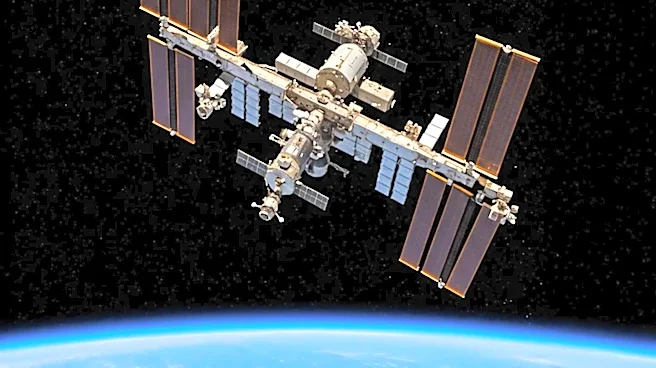
while continuing to hire for 277 open roles. This development comes months after Vast secured $500 million in funding aimed at launching the world's first commercial space station in 2027. Vast is one of several companies vying to develop a commercial successor to the International Space Station (ISS), which is slated for deorbiting in 2030. The company plans to launch its first space station, Haven-1, next year on a SpaceX rocket, with the modular 12-person Haven-2 expected to begin launches by 2028.
Why It's Important?
The layoffs at Vast highlight the intense competition and inherent challenges within the burgeoning commercial space industry, particularly in the U.S. The 'new space race' to replace the International Space Station involves significant capital investment and ambitious timelines, making efficient resource management and high performance critical. While Vast attributes the cuts to performance, the broader context of a competitive market and the substantial funding rounds suggest a high-pressure environment where companies must demonstrate rapid progress and operational excellence. For the U.S. space sector, the success of companies like Vast is crucial for maintaining leadership in space infrastructure and commercializing low-Earth orbit. The uncertainty surrounding NASA's plans to fund a new generation of commercial space stations further complicates the landscape, impacting investment and strategic decisions for these startups.
What's Next?
Vast plans to proceed with the launch of its first space station, Haven-1, next year aboard a SpaceX rocket. The company also aims to begin launching Haven-2, its modular 12-person space station, by 2028, with the long-term ambition of creating space stations capable of artificial gravity. Despite the recent layoffs, Vast's continued hiring for numerous open roles indicates its commitment to these ambitious goals. The company will need to demonstrate consistent progress and secure further funding to realize its vision, especially given the competitive landscape and the evolving strategies of NASA regarding commercial space stations. The performance of its upcoming launches and its ability to attract and retain top talent will be critical factors in its future success.
Beyond the Headlines
The challenges faced by Vast, even after significant funding, underscore the high-risk, high-reward nature of the commercial space industry. Developing and deploying space stations requires immense technological innovation, engineering prowess, and financial backing. The pursuit of artificial gravity, a long-held science fiction concept, by companies like Vast, signifies a bold leap towards making long-duration space habitation more feasible and comfortable for humans. However, the recent layoffs, even if performance-based, can impact employee morale and public perception, highlighting the human cost of rapid growth and intense competition in cutting-edge industries. This situation also brings to light the delicate balance between investor expectations, technological development, and workforce management in a sector that is still largely experimental and capital-intensive.