






What's Happening?
California lawmakers have approved two bills, Assembly Bill 2469 and Assembly Bill 2619, aimed at increasing transparency regarding water usage by data centers. Assembly Bill 2469, authored by Assemblymember Diane Papan, prohibits local governments from
approving new or expanded data centers unless the developer discloses its water plans and covers the full cost of any new water infrastructure required for the facility. Assembly Bill 2619, also by Papan, mandates that data center operators report their estimated or actual water sources and usage under penalty of perjury when seeking and renewing business licenses or permits. This bill is nearly identical to a previous one vetoed by Governor Gavin Newsom last year due to concerns about imposing rigid reporting requirements without fully understanding the impact on businesses and consumers. Both bills will now proceed to Governor Newsom's desk for his signature.
Why It's Important?
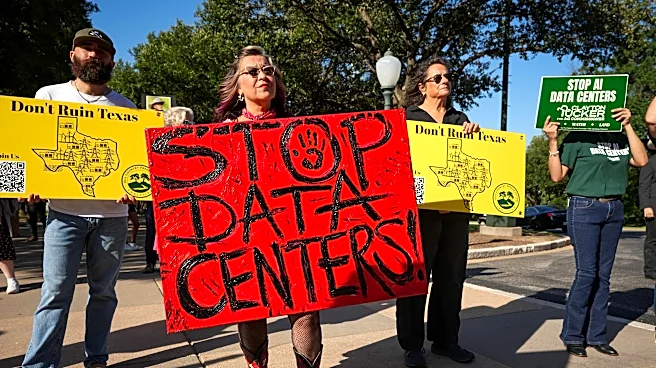
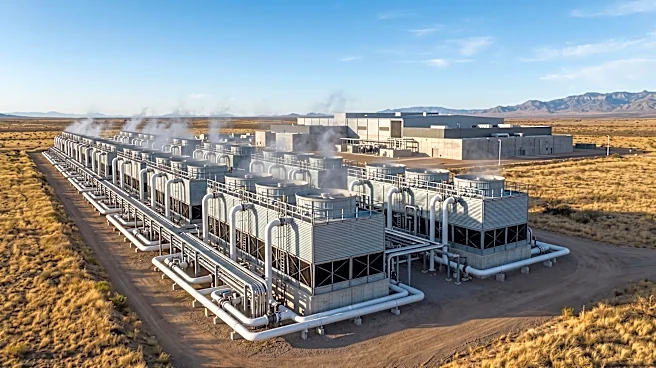
These legislative actions are significant as they address the growing environmental concerns associated with data centers, particularly their substantial water and electricity consumption. As artificial intelligence and digital infrastructure expand, the demand for data centers is increasing, making their environmental footprint a critical issue. California, a state frequently impacted by droughts, is taking a proactive stance to regulate water usage in this industry. The new requirements could set a precedent for other states and potentially influence national policy on data center development and environmental sustainability. For the tech industry, these bills represent a new regulatory challenge that could increase operational costs and impact site selection decisions. Developers will need to integrate water conservation and disclosure into their planning, potentially driving innovation in more water-efficient cooling technologies. The legislation also reflects a broader public concern, as a Public Policy Institute of California survey indicated that a majority of residents oppose data center construction due to environmental worries.
What's Next?
The two bills, Assembly Bill 2469 and Assembly Bill 2619, now await Governor Gavin Newsom's decision. Given his previous veto of a similar bill, his current stance will be closely watched. He will need to weigh the environmental benefits and public support for these measures against potential concerns from the tech industry regarding regulatory burdens. If signed into law, data center developers in California will face stricter requirements for water planning and disclosure, potentially leading to higher development costs and longer approval processes. This could encourage the industry to explore more sustainable practices and invest in water-saving technologies. The legislation could also inspire similar regulatory efforts in other states or at the federal level, particularly in regions facing water scarcity. The long-term impact will be a shift towards greater accountability and environmental consideration in the rapidly expanding data center sector.
Beyond the Headlines
The debate over data center water usage highlights a deeper tension between technological advancement and environmental sustainability. As the digital economy grows, the physical infrastructure supporting it, like data centers, consumes significant natural resources. This legislation brings to the forefront the ethical responsibility of the tech industry to mitigate its environmental impact. It also underscores the role of government in regulating emerging industries to ensure sustainable growth. The previous veto by Governor Newsom, influenced by tech industry pressure, suggests the powerful lobbying capabilities of the sector. The renewed legislative effort indicates a stronger push from lawmakers and the public to prioritize environmental concerns. This ongoing negotiation between industry interests, environmental advocacy, and government regulation will be crucial in shaping the future of sustainable technology development and could lead to new standards for corporate environmental responsibility in the digital age.