






What's Happening?
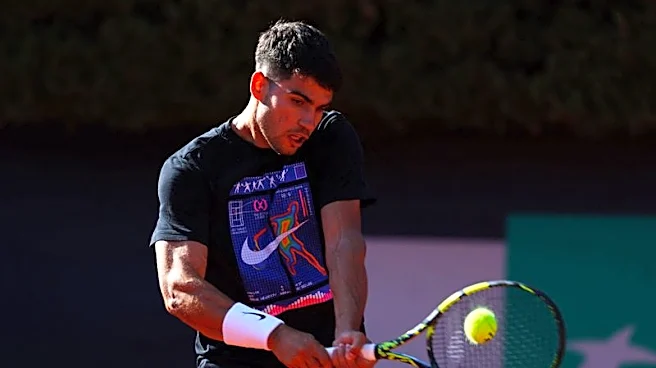
Carlos Alcaraz, the world No. 3 tennis player, has voiced his opinion on the structure of the professional tennis calendar, advocating for a reduction in the number of tournaments to alleviate player workload and prevent burnout. This stance comes after
his own four-month layoff due to a wrist injury, and he joins other players like Jack Draper and Aryna Sabalenka in criticizing the sport's extensive 11-month schedule. Despite concerns about player exhaustion, Alcaraz firmly believes that Grand Slam matches in men's singles should retain their best-of-five-set format. He argues that this format is integral to the legacy and unique character of the Grand Slams, stating that changing it would 'kill the legacy' of these major tournaments. He emphasized that the best-of-five format has been a tradition since the beginning and contributes to their special status.
Why It's Important?
Carlos Alcaraz's comments highlight a significant ongoing debate within professional tennis regarding player welfare and the sport's demanding schedule. The call for fewer tournaments by a top player like Alcaraz, supported by others, underscores the physical and mental toll the current 11-month calendar takes on athletes. This issue has implications for player longevity, injury rates, and the overall quality of play, as fatigued players may not perform at their peak. His insistence on maintaining the best-of-five-set format for Grand Slams, however, reflects a traditionalist view shared by many, emphasizing the historical and competitive value of these extended matches. The tension between preserving tradition and addressing modern player health concerns is a critical challenge for tennis governing bodies, impacting the sport's future structure and appeal.
What's Next?
The debate surrounding the tennis calendar and match formats is likely to continue, with players like Carlos Alcaraz, Jack Draper, and Novak Djokovic (who supports best-of-three sets for Grand Slams) expressing differing views. Tennis governing bodies, including the ATP and WTA, will face increasing pressure to address player burnout and consider potential adjustments to the schedule. While Alcaraz's strong stance on maintaining the best-of-five format for Grand Slams suggests resistance to immediate changes in major tournament structures, the broader discussion about the overall number of tournaments and the length of the season will likely gain momentum. Any future changes would require careful consideration of tradition, player health, fan engagement, and commercial interests.
Beyond the Headlines
The discussion initiated by Carlos Alcaraz delves into the fundamental tension between athletic performance, commercial interests, and the historical identity of professional tennis. The sport's relentless schedule, driven by broadcast rights, sponsorships, and global fan bases, often pushes athletes to their physical limits, leading to injuries and shorter careers. Alcaraz's position highlights a broader ethical question about the responsibility of sports organizations to prioritize athlete well-being over continuous revenue generation. His defense of the best-of-five-set format for Grand Slams also touches upon the cultural significance of endurance and tradition in sports, where certain elements are seen as sacrosanct. This ongoing dialogue could lead to a re-evaluation of the sport's economic model and its impact on the human element of competition.