






What's Happening?
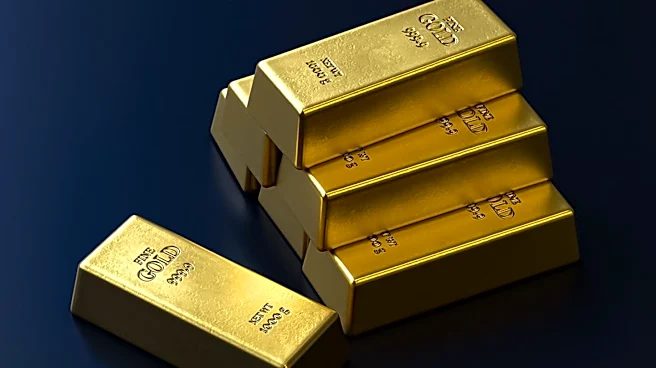
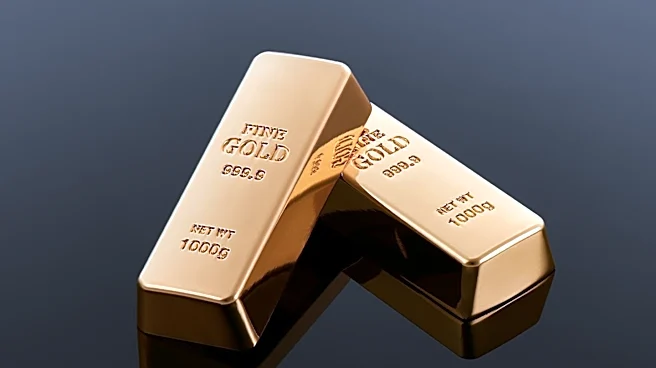
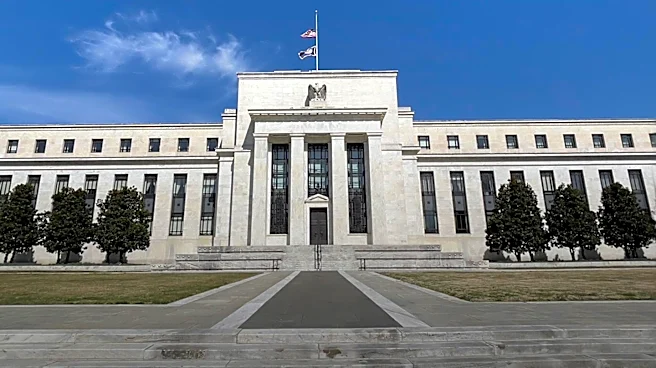
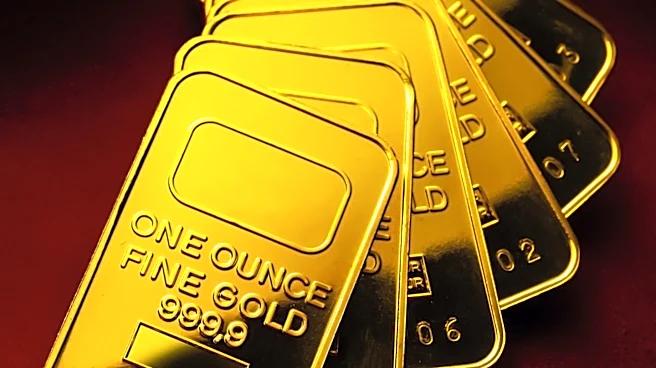
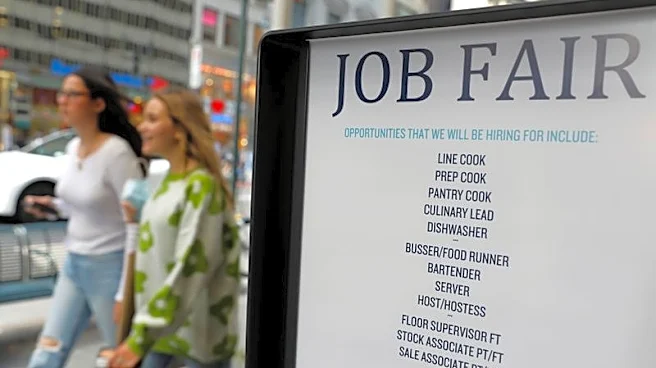
Gold prices have rallied by 2% to over $4,100 an ounce following the release of June's employment data, which showed a significant slowdown in job growth with only 57,000 jobs added. This has led to speculation that the Federal Reserve may delay further
interest rate hikes, providing support for gold as a safe-haven asset. The unemployment rate fell to 4.2%, but this was attributed to a decline in the labor force participation rate. Analysts suggest that the weaker job data highlights the fragility of the U.S. economy, and the potential for the Fed to maintain a more accommodative monetary policy could benefit gold prices.
Why It's Important?
The rally in gold prices underscores the metal's role as a hedge against economic uncertainty and inflation. The slower job growth and potential delay in interest rate hikes by the Federal Reserve could create a more favorable environment for gold, as lower rates reduce the opportunity cost of holding non-yielding assets. This development is significant for investors seeking to diversify their portfolios and protect against market volatility. Additionally, the performance of gold can influence broader market sentiment and investment strategies, particularly in times of economic uncertainty.
What's Next?
The future trajectory of gold prices will depend on the Federal Reserve's monetary policy decisions and the broader economic outlook. If the Fed signals a more dovish stance, gold could continue to benefit from increased demand as a safe-haven asset. However, any signs of economic recovery or stronger job growth could lead to a reassessment of interest rate expectations, potentially impacting gold's appeal. Investors will be closely monitoring economic data and Fed communications for clues on the future direction of monetary policy and its implications for gold and other financial markets.