





What's Happening?
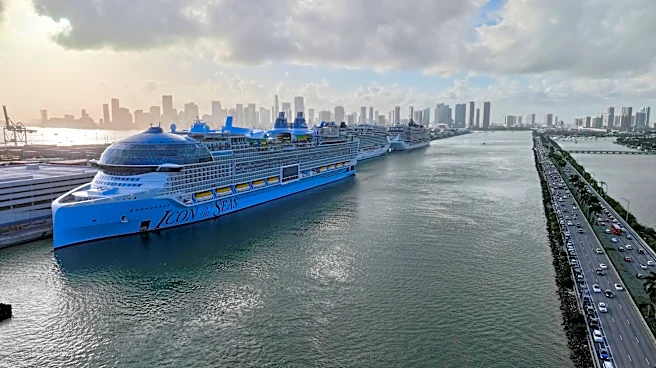
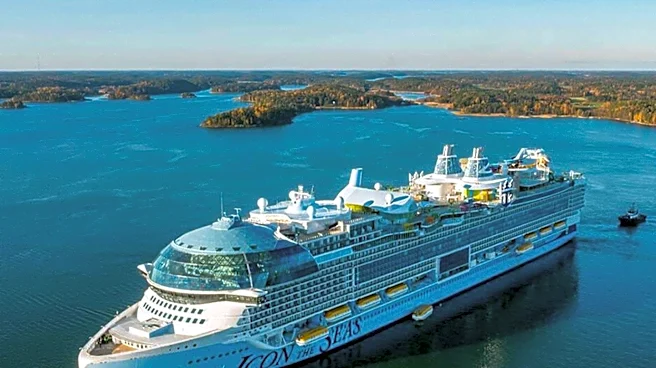
Royal Caribbean is significantly expanding its presence in the Caribbean, with plans to deploy 11 cruise ships to the region by the summer of 2028. This includes four of the world’s largest Icon class ships, each weighing 248,663 gross tons. The company
has also placed orders for three more Icon class vessels and one additional Oasis class ultra-large cruise ship. This expansion is part of a broader industry trend where cruise lines are investing heavily in the Caribbean, which remains the most popular destination for cruises. Despite record booking levels reported by cruise lines for 2027, the surge in new ships has raised questions about potential overcapacity in the market. Goldman Sachs reported an 11.5% increase in cruise capacity for 2027, marking a 60% rise since 2019. Cruise lines are responding with various promotions and incentives, though some are shifting pricing models to maintain steadier pricing.
Why It's Important?
The substantial investment by Royal Caribbean and other cruise lines in the Caribbean underscores the region's critical role in the global cruise industry. The introduction of more mega-ships like the Icon class vessels will likely intensify competition for port infrastructure and tourist resources in Caribbean destinations. While this expansion could boost local economies through increased tourism, it also raises concerns about environmental impact and the potential for over-tourism in popular ports. For consumers, the increased capacity might lead to more competitive pricing and a wider array of cruise options, but it could also dilute the travel experience if ports become too crowded. The industry's confidence in the Caribbean, despite overcapacity warnings, suggests a long-term strategic commitment to the region, potentially reshaping its tourism landscape.
What's Next?
In the immediate future, the cruise industry will continue to monitor booking trends and adjust pricing strategies to fill the increasing capacity. Royal Caribbean and other lines will proceed with the construction and deployment of their new ships, further solidifying the Caribbean as a primary cruising ground. We can expect continued development of private destinations and beach clubs by cruise lines, as Royal Caribbean is doing, to enhance the passenger experience and manage guest flow. Stakeholders in Caribbean nations will need to adapt to the growing influx of tourists, potentially investing in port upgrades and infrastructure to accommodate larger vessels and more passengers. The industry will also likely face ongoing scrutiny regarding its environmental footprint and its impact on local communities as capacity continues to grow.
Beyond the Headlines
The aggressive expansion in the Caribbean by Royal Caribbean and its competitors highlights a broader industry strategy to capitalize on the enduring popularity of cruise travel, particularly among younger demographics. The focus on mega-ships and private destinations reflects a trend towards creating self-contained, curated experiences that offer extensive onboard amenities and exclusive shore excursions. This approach could lead to a more homogenized cruise experience, potentially reducing the incentive for passengers to explore local cultures and economies beyond the cruise line's offerings. Furthermore, the environmental implications of such large-scale operations, including waste management, emissions, and marine ecosystem impact, will remain a critical long-term challenge for the industry and regulatory bodies.