









What's Happening?
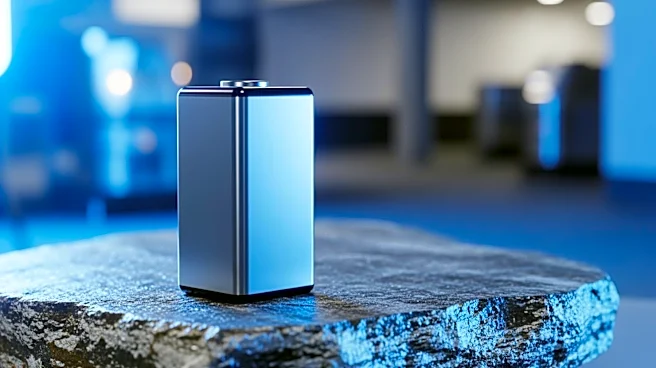
Critical Resources (ASX: CRR) has announced a significant advancement in its solid-state battery technology program. The company successfully produced a full solid-state battery composite layer using a single dry, room-temperature deposition step. This
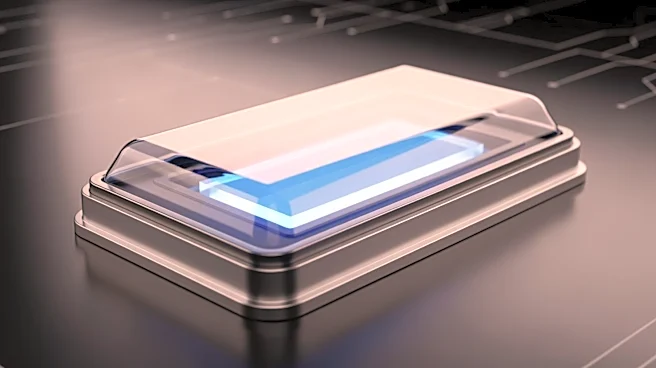
development marks a technical milestone in their battery intellectual property (IP) program. The process, described as DSD, is likened to a 3D-printing approach and forms a dense, uniform coating without the need for solvents or drying cycles. This advancement is part of Critical Resources' strategy to develop and license battery and manufacturing-process IP, rather than manufacturing batteries in-house. The company has been working on this since securing a patent portfolio from the South Dakota School of Mines & Technology in November 2025. The next steps involve testing the composite layer's performance in CR2032 coin cells and developing a pouch-cell prototype.
Why It's Important?
This development is crucial as it represents a potential breakthrough in the manufacturing of solid-state batteries, which are considered safer and more efficient than traditional lithium-ion batteries. The ability to produce a composite layer in a single step could reduce manufacturing complexity and costs, making solid-state batteries more commercially viable. This advancement could have significant implications for the battery industry, particularly in the context of electric vehicles and renewable energy storage, where efficient and safe battery technology is critical. However, the success of this technology will depend on further testing and validation of the battery's performance and the company's ability to secure funding or partnerships for the next stages of development.
What's Next?
The immediate focus for Critical Resources is to obtain quantitative data from the coin-cell testing program. This data will be crucial in assessing the technical viability of the composite layer. Additionally, the company plans to scale up the technology to a pouch-cell format, which presents its own set of challenges in terms of uniformity and reproducibility. The company also needs to address funding requirements for further development. The outcome of these next steps will determine the commercial potential of the technology and its impact on the broader battery market.