



What's Happening?
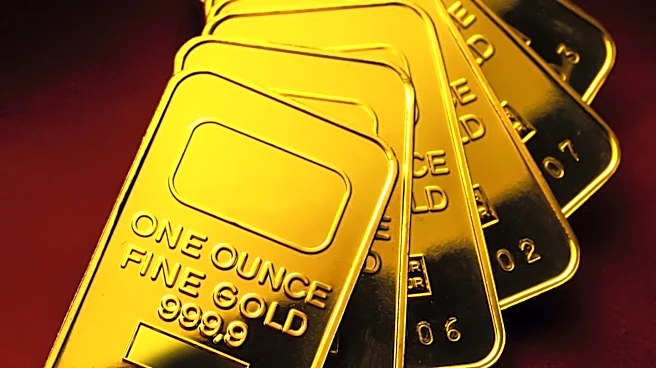
Gold prices have surged to a seven-week high, reaching $4,265 per ounce, driven by a weakening U.S. dollar and falling Treasury yields. The anticipation of the Federal Reserve easing up on additional rate hikes has contributed to increased demand for
gold as a safe-haven asset. Central banks have also shown strong demand, with a 62% increase in gold purchases compared to last year. Traders are closely monitoring the upcoming U.S. Non-Farm Payrolls report, which could influence gold's trajectory towards $4,334 or trigger profit-taking.
Why It's Important?
The rise in gold prices reflects broader economic trends, including concerns about inflation and interest rates. As a traditional safe-haven asset, gold's appeal increases during times of economic uncertainty. The current market conditions suggest a cautious approach by the Federal Reserve, which could impact future monetary policy decisions. The strong demand from central banks indicates confidence in gold's long-term value, potentially influencing investment strategies. The outcome of the Non-Farm Payrolls report will be crucial in determining the short-term direction of gold prices and investor sentiment.
What's Next?
The U.S. Non-Farm Payrolls report will be a key indicator for the market, potentially affecting the Federal Reserve's policy decisions and the trajectory of gold prices. A stronger-than-expected report could lead to increased Treasury yields, putting pressure on gold. Conversely, weaker job data might support further gains in gold prices. Investors will continue to monitor economic indicators and central bank actions to gauge the future direction of the market. The ongoing geopolitical developments, particularly in the Middle East, may also influence gold's appeal as a safe-haven asset.