



What's Happening?
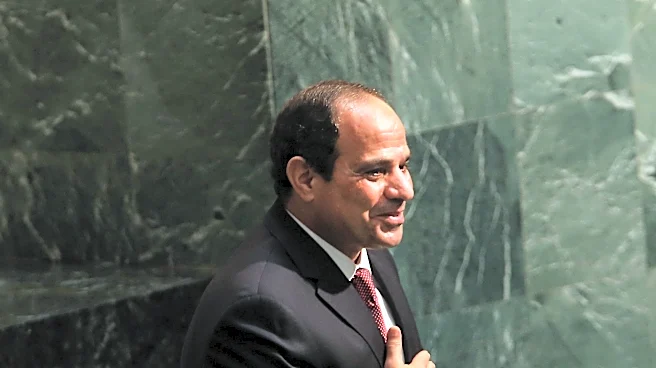
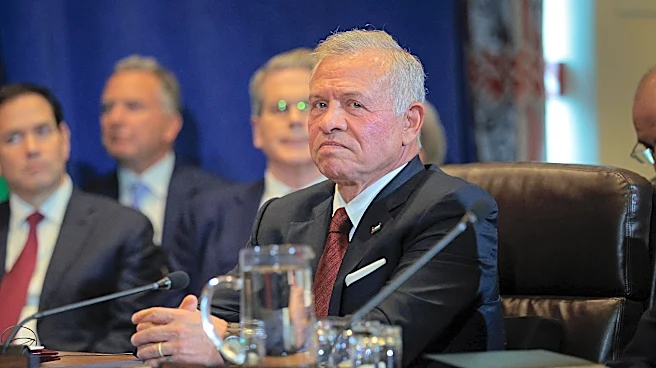
President Abdel Fattah El-Sisi of Egypt has directed the finalization of regulatory and institutional frameworks for new financing mechanisms in infrastructure projects. These mechanisms will involve cooperation with international institutions and private-sector
participation, aiming to reduce pressure on foreign currency reserves. The directive came during a meeting with Prime Minister Moustafa Madbouly and Minister of Planning and Economic Development Ahmed Rustom, where they reviewed Egypt's economic and social development plan for the 2026/2027 fiscal year. The plan targets an economic growth rate of up to 5.4% and total investments of EGP 3.7 trillion. President El-Sisi also emphasized the importance of enhancing private sector participation, fostering competition, and boosting employment levels to improve citizens' living standards. Additionally, preparations for a business meeting in Cairo, in cooperation with the World Economic Forum on November 16 and 17, were reviewed, which will serve as a platform to showcase investment opportunities across various sectors in Egypt.
Why It's Important?
This initiative is crucial for Egypt's economic stability and growth, particularly in easing the strain on foreign currency reserves. By attracting international institutions and private sector investment into infrastructure, Egypt aims to secure necessary funding without solely relying on its own foreign exchange, which can be volatile. The focus on private sector participation is a strategic shift to drive economic growth and create jobs, moving away from a state-dominated economic model. This could lead to increased efficiency, innovation, and a more dynamic economy. The targeted economic growth of 5.4% and significant investment of EGP 3.7 trillion signal an ambitious effort to bolster the national economy and improve living standards for its citizens. The World Economic Forum meeting further underscores Egypt's commitment to attracting global investment and integrating into the international economic landscape.
What's Next?
The immediate next steps involve finalizing the regulatory and institutional frameworks for these innovative financing mechanisms. This will include a thorough review of financing requests to ensure alignment with state priorities and an assessment of alternative options to select the most cost-effective and suitable terms. The dedicated business meeting in Cairo with the World Economic Forum on November 16 and 17 will serve as a critical platform to present these investment opportunities to a global audience. Following this, the government will likely focus on implementing the economic and social development plan for the 2026/2027 fiscal year, with continued efforts to enhance private sector involvement and expand digital public services. The National Program for Economic Transformation (2027–2030) will also be further developed, building on existing sectoral strategies and aiming to strengthen the economy's resilience.
Beyond the Headlines
The push for innovative financing mechanisms and increased private sector participation reflects a broader strategic pivot in Egypt's economic policy. This move could signify a long-term commitment to market-oriented reforms and a reduced reliance on public debt, which has been a significant concern. The emphasis on digital public services and workforce development, including partnerships with entities like LinkedIn, indicates an understanding of the need for a modern, skilled workforce and efficient governance to support economic transformation. This comprehensive approach suggests an effort to not only address immediate economic pressures but also to build a more resilient and competitive economy for the future. The success of these initiatives will depend on transparent implementation, investor confidence, and the government's ability to maintain a stable economic and political environment.