







What's Happening?
Blue Crow Media has published 'Concrete New York,' a new guidebook focusing on brutalist and concrete contemporary architecture in New York City. This release expands their existing library of architectural guides, which previously covered cities like
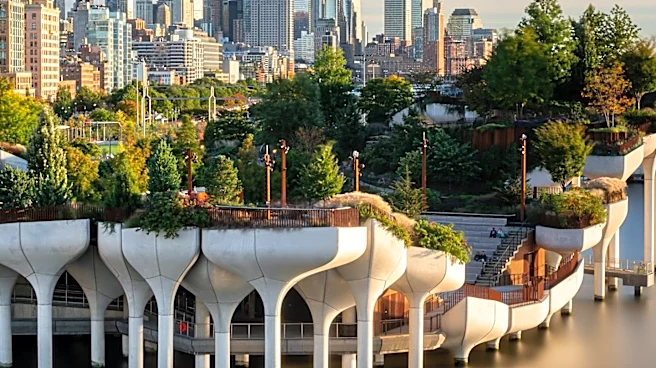
London, Berlin, Paris, and a general guide to Asia. The book, authored by Allison C. Meier, explores New York's concrete legacy, showcasing over 50 featured buildings. While New York is not typically associated with brutalism, the guide highlights the significant role concrete has played in shaping the city's skyline. It includes well-known structures like Frank Lloyd Wright’s Guggenheim and more obscure examples such as Pier Luigi Nervi’s George Washington Bridge Bus Station and the Tribeca Synagogue by William N. Breger Associates. The publication features photography by Jason R. Woods, presenting these diverse structures in black and white. The guide also updates its coverage to include contemporary works by architects like Studio Gang, David Adjaye, and Steven Holl, offering a comprehensive look at New York's concrete architecture, both old and new.
Why It's Important?
The release of 'Concrete New York' is significant for architectural enthusiasts, urban planners, and those interested in the cultural and historical development of American cities. It sheds light on a less-recognized aspect of New York City's architectural identity, challenging the common perception of the city's building materials. By documenting and celebrating concrete structures, the guidebook contributes to the preservation and appreciation of these often-overlooked architectural styles. This publication can influence public perception and potentially encourage the conservation of brutalist and concrete buildings, which have sometimes faced demolition due to aesthetic preferences or redevelopment pressures. For the U.S. architectural community, it provides a valuable resource for understanding the evolution of design and construction in a major metropolitan area, highlighting the contributions of both historical and contemporary architects to the urban fabric.
What's Next?
The 'Concrete New York' guidebook is available for purchase, both individually and as part of a three-book Architectural City Guides set. Its release is likely to generate renewed interest in New York City's concrete architecture, potentially leading to increased architectural tourism and local exploration of the featured sites. Educational institutions and architectural firms may utilize the guide as a resource for study and inspiration. The continued success of Blue Crow Media's architectural guide series suggests a growing market for specialized publications that delve into specific architectural styles and urban histories. This could encourage further documentation and appreciation of similar architectural legacies in other U.S. cities, fostering a broader understanding of American architectural diversity.
Beyond the Headlines
Beyond its immediate utility as a guide, 'Concrete New York' touches upon deeper themes related to architectural heritage and urban identity. Brutalism, often characterized by its raw concrete and monumental scale, has historically evoked strong reactions, ranging from admiration for its honesty and structural expression to criticism for its perceived harshness. This guidebook contributes to a re-evaluation of brutalist architecture, encouraging a more nuanced understanding of its aesthetic and functional merits. It also highlights the ongoing dialogue between historical preservation and urban development, as cities like New York continually evolve. The book implicitly argues for the value of diverse architectural styles in creating a rich urban tapestry, suggesting that even seemingly 'unpopular' forms of architecture hold significant cultural and historical weight that deserves recognition and protection.